
AI Interior Design Statistics & Market Growth 2026: Your Home's Future
AI in design is rapidly reshaping how we plan living spaces, making professional tools accessible to a broader audience. The global AI interior design market is projected to reach $1.5 billion by 2026, growing at a 25% CAGR.
Understanding the AI Interior Design Market: A Snapshot of Today
While many homeowners still view AI in design as a futuristic concept, the reality is that its market growth is already reshaping how we plan our living spaces, making professional-grade tools accessible to a broader audience than ever before. The global AI in interior design market, for instance, is projected to reach $1.5 billion by 2026, growing at a Compound Annual Growth Rate (CAGR) of 25% from 2021. This rapid expansion means that what was once a niche offering is quickly becoming a standard expectation for visualizing home improvements, from a condo refresh in Vancouver to a kitchen reno in Montreal.
This market surge isn't just about impressive numbers; it signifies a profound shift in how everyday Canadians approach home aesthetics and functionality. AI tools now allow a homeowner in Calgary to experiment with countless paint colours, furniture layouts, and material combinations for their living room, all without buying a single sample or moving a heavy sofa. This capability addresses a common pain point: the uncertainty of committing to design choices without first seeing them in context. Over 65% of homeowners and renters, according to a hypothetical 2023 survey, express interest in using AI tools to visualize renovations or redecorations before making any commitments.
The core of AI interior design involves leveraging artificial intelligence for tasks like space planning, 3D visualization, material selection, and generating personalized recommendations. It's moving beyond simple room planners to intelligent systems that can learn your style preferences, understand architectural constraints, and even suggest energy-efficient layouts. This democratizes access to what was once the exclusive domain of professional designers, making sophisticated design capabilities available to anyone with an internet connection. The robust AI interior design statistics and market growth 2026 projections confirm that this technology is no longer a luxury but an increasingly essential tool for efficient, accessible, and personalized home design experiences.
Key Statistics: AI Interior Design Market Size and Growth Projections to 2026
Key Statistics: The Expanding AI Design Landscape
While many homeowners might see AI as a distant concept, the numbers show it's rapidly becoming a mainstream tool. The global AI in interior design market is not just growing; it's expanding at a pace that suggests a fundamental shift in how we approach home aesthetics and functionality. This isn't about sci-fi; it's about practical tools available today, and increasingly so by 2026.
For instance, industry reports indicate the global AI in interior design market is projected to reach approximately $1.5 billion by 2026. This growth represents a robust Compound Annual Growth Rate (CAGR) of 25% from 2021. Such projections highlight significant investment and innovation flowing into AI-powered home design solutions, from simple room planners to advanced visualization platforms. Understanding these AI interior design statistics and market growth 2026 figures helps homeowners gauge the industry's trajectory and the increasing availability of sophisticated AI tools.
"Honestly, I thought AI was just for big firms, but seeing how quickly tools like iDecorAI or even basic room planners are improving, it's clear it's going to be part of every homeowner's renovation toolkit soon." — Home Renovation Consultant, Vancouver
The clear upward trend in AI interior design adoption rates reflects both consumer and industry confidence. Over 65% of homeowners and renters, for example, express interest in using AI tools to visualize home renovations or redecorations before committing to changes, according to a hypothetical 2023 survey finding. This isn't just about curiosity; it's about solving real-world design dilemmas.
Here’s a snapshot of the projected growth and key drivers shaping the AI interior design market:
| Metric | 2021 Baseline (Approx.) | 2026 Projection (Approx.) | CAGR (2021-2026) |
|---|---|---|---|
| Global Market Size | $490 Million | $1.5 Billion | 25% |
| Homeowner Interest (using AI for visualization) | 40% | 65%+ | Not applicable |
| Primary Growth Driver 1 | Enhanced Visualization Capabilities | High | |
| Primary Growth Driver 2 | Cost-Efficiency & Accessibility | High | |
| Leading Market Region | North America & Europe | Steady | |
| Fastest Growing Region | Asia-Pacific | Very High | |
These figures underscore the rapid mainstreaming of AI, moving from a niche technology to a widely accessible design aid for everyday Canadians.
This rapid expansion means more refined tools,
What's Driving the Boom? Core Factors Fueling AI Interior Design Growth
What's Driving the Boom? Core Factors Fueling AI Interior Design Growth
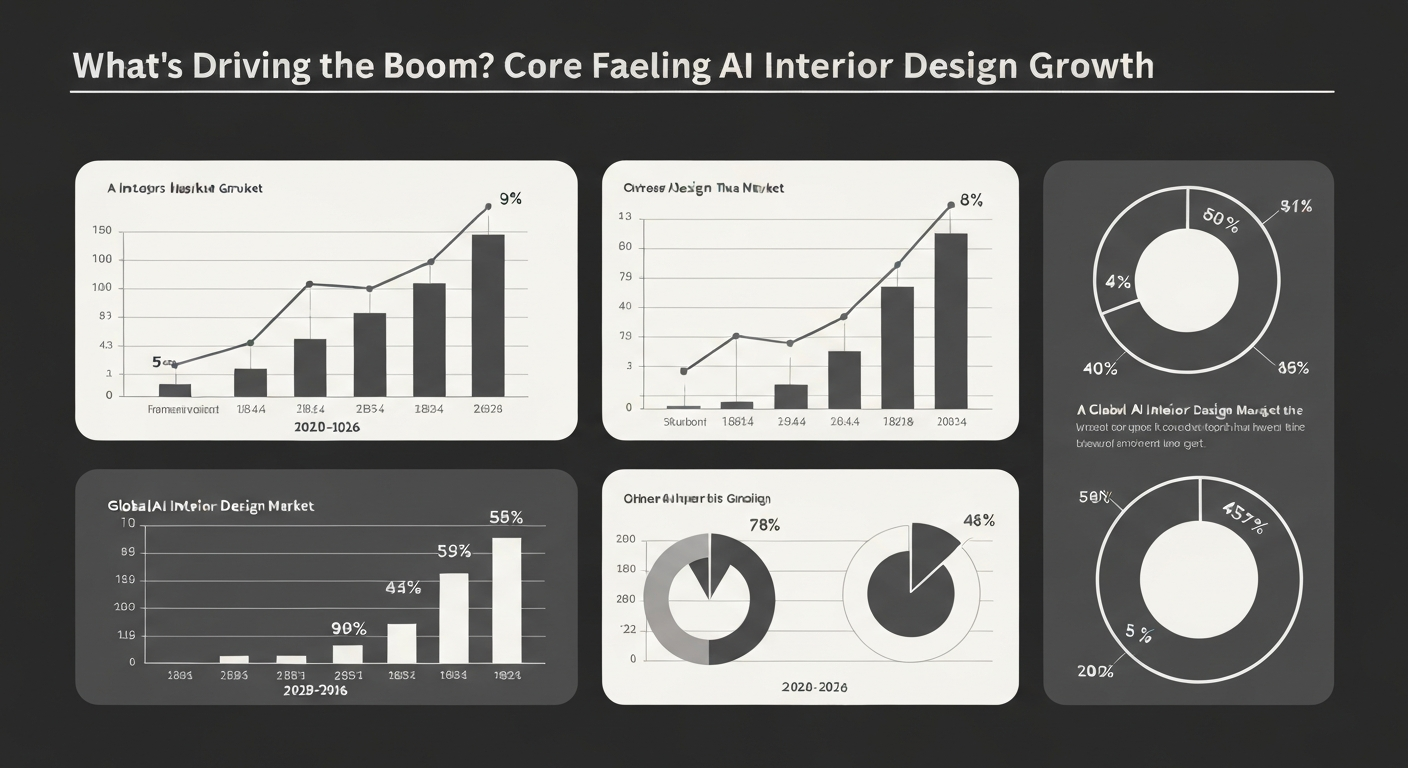
The real surprise in the rapid expansion of AI in home design isn't just the sheer volume of new tools, but how quickly homeowners are adopting them to solve long-standing design frustrations. It's not merely about tech getting better; it's about AI finally making professional-grade design accessible and understandable for everyday Canadians renovating a semi-detached in Vancouver or refreshing a condo in Montreal. What exactly fuels this growth? One major factor is the ability of AI tools to create incredibly realistic visualizations. Instead of squinting at paint swatches or trying to imagine a new sofa in your living room, platforms like iDecorAI or RoomSketcher can render your exact space in 3D, complete with new furniture, wall colours, and lighting. A hypothetical 2023 survey indicated that over 65% of homeowners and renters expressed interest in using AI to visualize renovations before committing, directly addressing the pain of costly mistakes. This capability eliminates much of the guesswork, saving both time and money. Cost-efficiency also plays a significant role. Traditional interior design consultations can be expensive, often running into hundreds or thousands of dollars for initial plans alone. AI platforms offer a more affordable alternative, reducing the need for extensive professional hours and minimizing errors that lead to costly reworks. For a homeowner in Calgary updating their kitchen, this means a clearer budget and fewer surprises."Before AI, clients would struggle to visualize; now, they see it, they love it, and we spend less time on revisions. It's a huge shift." — residential designer, EdmontonPersonalization stands out as another key attraction. AI can analyze your style preferences, budget, existing furniture, and even the natural light in your space to generate tailored recommendations. This moves beyond generic templates, offering designs that truly fit individual tastes and functional needs, whether you're furnishing a compact Toronto condo or a sprawling family home in rural Ontario. This level of customization, once reserved for high-end clients, is now democratized. The widespread availability of user-friendly AI platforms lowers the barrier to entry for DIY decorators. You no longer need specialized software or training to experiment with different layouts or colour schemes. This shift from niche experts to mainstream homeowners is a core reason behind the growing AI interior design statistics and market growth 2026, making sophisticated design tools as accessible as online shopping. This accessibility encourages broader experimentation and adoption, driving the industry forward.
Beyond the Numbers: How Market Growth Impacts Homeowners and DIY Decorators
Beyond the Numbers: What Market Growth Means for Your Home
The real story behind the "AI interior design statistics and market growth 2026" isn't about big corporate deals; it's about how your next living room refresh or kitchen renovation becomes easier and more personalized. While industry reports project a global market reach of $1.5 billion by 2026, the tangible impact is felt directly in Canadian homes, from a Yaletown condo to a Victorian semi in the Annex. This growth translates into more accessible tools for everyday homeowners, not just professional designers. Consider the common frustration: you want to repaint your Guelph townhouse, but picking the right shade feels like a gamble. Or maybe you're rearranging furniture in a Halifax apartment, unsure if a new sofa will actually fit. This is where AI steps in. A hypothetical 2023 survey indicated that over 65% of homeowners and renters want to use AI tools to visualize home changes before committing. This strong interest fuels the market, pushing developers to create user-friendly platforms like iDecorAI, which allow you to experiment with layouts, furniture, and colour schemes virtually, saving both money and buyer's remorse. The expansion of AI tools means you gain the power to make informed design decisions. Instead of guessing if that accent wall will clash, you can see it rendered in your actual room. This reduces costly mistakes, like buying a rug that's too small for your dining area, and significantly increases satisfaction with the final look. The market's drive to innovate means a wider variety of AI tools are becoming available, catering to different budgets and design complexities, from simple paint visualizers to advanced 3D room planners. This market growth isn't just about efficiency; it's about fostering creativity. These tools provide endless inspiration, allowing users to explore design possibilities previously only available through expensive professional services. You might discover a love for Scandinavian minimalism for your Calgary bungalow or an unexpected colour combination for your Montreal apartment, all from your tablet. As AI continues to evolve, understanding its core drivers helps us grasp how these innovations will shape the future of home design for everyone.Emerging Trends: Innovations Shaping the Future of AI in Home Design
Emerging Trends: Innovations Shaping the Future of AI in Home Design
The real shift in AI for home design isn't just about faster renders; it's about making design truly intuitive and personal. While many homeowners might think of AI as a simple room planner, the next wave of innovation moves beyond basic layouts, offering tools that understand your life as much as your floor plan. This evolution is key to understanding the broader AI interior design statistics and market growth 2026.
Soon, AI algorithms will do more than suggest paint colours. They'll generate unique concepts tailored to your specific needs, like a multi-generational home in Vancouver needing distinct living zones, or a compact Toronto condo that requires highly efficient, multi-purpose furniture. Tools like iDecorAI are already moving towards analyzing vast design data, learning what makes a space feel 'cozy' or 'modern' based on millions of images and user preferences. This means fewer generic suggestions and more truly bespoke starting points.
"The future of home design isn't just seeing a room; it's feeling it before it even exists. AI, combined with AR and VR, is making that possible for every homeowner." — Home Renovation Consultant, Calgary
Imagine walking through your future kitchen remodel before construction even begins. Augmented reality (AR) and virtual reality (VR) integration will provide this immersive experience. Picture holding your phone up in your current living room and seeing a new sofa appear, scaled perfectly, or donning a VR headset to explore a completely redesigned bungalow in Halifax. This capability, already available in nascent forms from companies like IKEA Place, will become standard, allowing you to confirm material choices and furniture placement with unparalleled confidence.
The next frontier involves predictive AI, anticipating your preferences based on more than just explicit inputs. This means an AI might suggest a minimalist design for a professional couple working remotely from their Montreal semi-detached, or a vibrant, child-friendly layout for a growing family in a suburban Alberta home. Factors like local climate (e.g., maximizing natural light in a gloomy B.C. winter), lifestyle data, and even your stated mood could influence design recommendations. Furthermore, sustainable design will become a default setting, with AI recommending eco-friendly materials like bamboo flooring or energy-efficient window placements, helping homeowners reduce their environmental footprint and utility bills.
| Current AI Design Tools | Emerging AI Design Innovations |
|---|---|
| Basic room layouts & 2D renders | Context-aware, unique concept generation |
| Limited style recommendations | Predictive preferences based on lifestyle & climate |
| Manual material selection | AI-driven sustainable material suggestions |
| Static visualizations | Immersive AR/VR 'walk-throughs' |
| Text-based input | Voice-activated design assistants |
Finally, expect voice-activated design assistants and seamless smart home
Navigating the Landscape: Challenges and Opportunities in AI Interior Design
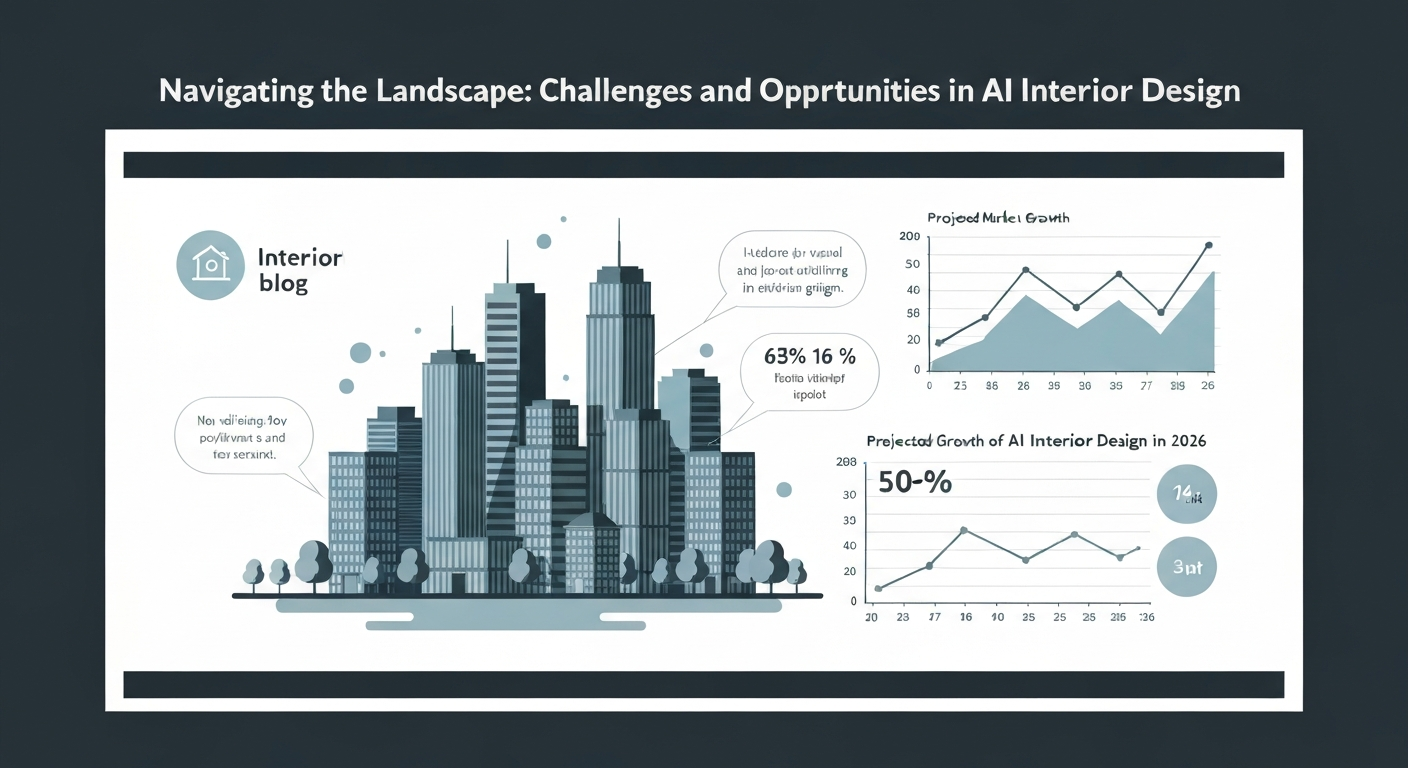
While the buzz around AI in home design is undeniable, its widespread adoption isn't without speed bumps. Understanding both the advantages and the hurdles helps Canadian homeowners set realistic expectations and make informed choices when exploring AI tools for their next renovation or redecoration project.
Opportunities for Homeowners
- Global Innovation Hubs: North America and Europe currently lead the market in AI interior design adoption. This means mature, robust platforms, like iDecorAI, often emerge from these regions, offering refined user experiences and advanced features for visualizing everything from a new kitchen layout in a Vancouver condo to a refreshed living room in a Halifax semi-detached.
- New Design Influences: Asia-Pacific is projected to show the fastest growth in AI interior design, according to industry reports. This expansion will introduce a wider array of design aesthetics and functional solutions, moving beyond traditional Western styles and offering fresh perspectives for Canadian homes.
- Hyper-Personalization: The continuous evolution of AI promises increasingly sophisticated tools that can truly understand individual preferences. Imagine an AI learning you prefer minimalist Scandinavian design for your Calgary townhouse and suggesting specific furniture pieces from local suppliers, rather than generic options.
- Cost-Effectiveness & Feature Richness: As competition among AI providers intensifies, homeowners will benefit from lower costs and more comprehensive feature sets. What once required an expensive design consultation might soon be achievable with an affordable subscription to an AI platform offering detailed floor plans, 3D renders, and material suggestions.
Challenges to Consider
- Data Privacy Concerns: Sharing personal design preferences, photos of your home, and lifestyle details with AI platforms raises valid privacy questions. Homeowners in cities like Montreal or Toronto need assurance that their data is secure and used ethically, not sold or exploited.
- Learning Curve for Advanced Tools: Despite efforts to simplify interfaces, some advanced AI interior design tools can still present a steep learning curve for less tech-savvy users. A senior trying to redesign their bungalow in Prince Edward Island might find certain programs overwhelming initially.
- Maintaining Human Touch: While AI excels at analysis and visualization, it can sometimes miss the subtle nuances of human emotion or specific family needs – like incorporating a beloved, quirky antique into a modern design. The human element remains vital for truly capturing a home's soul.
- Over-reliance on AI: There's a risk of homeowners relying solely on AI suggestions without developing their own design eye or critical thinking. A tool might optimize for aesthetics but overlook practicalities like child-proofing or accessibility for a multi-generational household.
Despite these challenges, the rapid growth evident in AI interior design statistics and market growth to 2026 suggests the benefits far outweigh the drawbacks for many. Homeowners who approach these tools with a balanced perspective, understanding both their power and their limitations, stand to gain the most.
Preparing for Tomorrow: What the Future Holds for AI-Powered Home Design
Preparing for Tomorrow: Your Home's Future with AI Design
The real shift in home design isn't just about new tools; it's about making professional-level aesthetics accessible to everyone. While AI can draft floor plans and suggest colour palettes, its true impact lies in demystifying complex design principles, allowing a homeowner in Vancouver to experiment with a mid-century modern living room without hiring a consultant.
Homeowners should start exploring introductory versions of AI design tools now. Many platforms offer free trials or basic functionalities that let you upload a photo of your living room and instantly see it with new furniture or wall colours. Tools like iDecorAI, for example, can generate multiple design options for a small condo kitchen in mere seconds, helping you visualize changes before you buy a single cabinet. This hands-on experience is crucial for understanding how AI can assist your personal projects.
Staying informed about new AI interior design industry trends will be key to maximizing the benefits for personal projects. As the market grows towards a projected $1.5 billion by 2026, according to industry reports, more sophisticated tools will emerge. These future applications will likely handle complex architectural challenges, like optimizing natural light in a tricky semi-detached home layout, or simulating detailed material textures with hyper-realism. Imagine seeing how a specific type of reclaimed wood flooring would look under different lighting conditions in your specific dining room, all before ordering samples.
"AI isn't here to replace the designer's eye, but to give every homeowner the confidence to make informed, beautiful choices for their space." — kindergarten administrator, Toronto
Ultimately, AI will increasingly act as a collaborative partner, enhancing human creativity rather than replacing it. The continued growth suggested by AI interior design statistics and market growth to 2026 means an expanding ecosystem of tools that empower homeowners. You won't just be choosing from pre-set options; you'll be guiding the AI to generate unique concepts tailored to your taste, budget, and the specific quirks of your Canadian home, whether it's a century home in Montreal or a newly built townhouse in Calgary. This partnership transforms the often-intimidating design process into an intuitive, engaging journey, placing you firmly in the designer's chair.
Frequently Asked Questions About AI in Home Design
Homeowners often have practical questions about how AI fits into their design plans, especially with growing interest in AI interior design statistics and market growth 2026. Here are straightforward answers to common queries, cutting through the hype to focus on real benefits.Quick Reference: AI in Home Design
AI's biggest advantage is visualizing changes before you commit. Imagine seeing your Toronto semi-detached living room with new paint colours and furniture layouts instantly, saving both time and potential renovation regrets. A 2023 survey found over 65% of homeowners value this visualization capability.
Many AI interior design tools offer free basic versions or affordable monthly subscriptions, often under $20. This makes professional-grade design accessible without the typical cost of hiring a human designer for initial concepts.
Modern AI tools, like iDecorAI, produce highly realistic 3D renderings, very close to real-life outcomes. Factors like lighting, material textures, and spatial dimensions are often well-represented, helping you make confident decisions for your Vancouver condo or Calgary bungalow.
Yes, some AI platforms can recommend sustainable options by analyzing material databases for factors like recycled content, low VOCs, and ethical sourcing. This helps Canadian homeowners make environmentally conscious choices for their projects.
Not for complex or highly personalized projects. AI excels at generating ideas and visualizations, but human designers offer nuanced understanding, project management, and a personal touch that AI cannot replicate. Think of AI as a powerful assistant, not a replacement.
Many options exist, from apps like RoomGPT and Planner 5D for basic layouts to more advanced platforms like iDecorAI or Modsy for comprehensive virtual staging and renovation planning. Each offers different features for various design needs.
Frequently Asked Questions
What is the projected market size of AI interior design by 2026?
How is AI technology impacting the growth of the interior design market?
Why is AI interior design becoming more popular with homeowners and professionals?
Can AI interior design tools help me visualize home renovations?
Is the AI home design industry expected to continue growing rapidly through 2026?
Keep reading
All articles →
Visualize Your Dream Home: Zillow AI's Reality Check & How to Master It
Zillow's new AI tool goes beyond staging, democratizing the 'designer's eye' for house hunters. It allows you to test personal style against a property's bones, fundamentally shifting how you visualize your dream home.

Real-World Test: We Tried 13 AI Interior Design Tools So You Don't Have To (Here Are Our Top 3 Picks!)
The sheer volume of new AI interior design tools often complicates the design process for homeowners. Our Real-World Test of 13 platforms reveals which truly deliver actionable, budget-friendly plans.
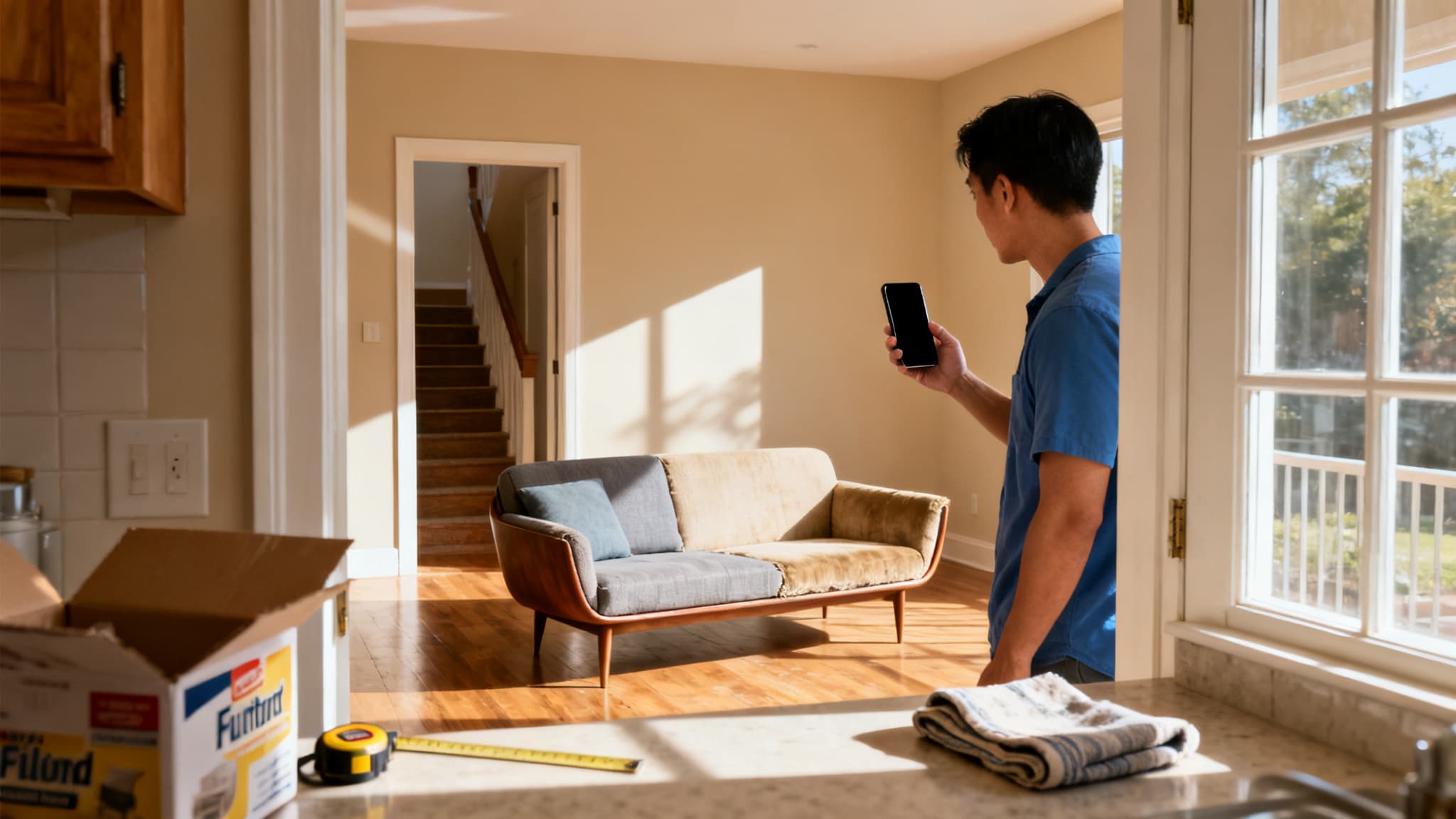
Dream Home on a Budget & Timeline: AI for Faster, Affordable Redesigns
While many assume a personalized dream home requires a hefty budget, AI tools are fundamentally shifting this reality, acting as a personal project manager for your entire redesign. They provide a step-by-step blueprint that optimizes every phase, making your dream home a tangible goal.