

AI Interior Design: Traps, Benefits & Human-Led Success
Many assume AI interior design replaces human creativity, but its true power lies as a sophisticated "idea engine." These tools excel at tedious tasks like generating colour palettes or optimizing layouts, saving human designers hours.

Deconstructing the Hype: What AI Interior Design Truly Offers (and Doesn't)
Deconstructing the Hype: What AI Interior Design Truly Offers (and Doesn't)
While many assume AI interior design tools replace human creativity, their true power lies not in autonomous design, but as sophisticated "idea engines" that tackle the tedious, data-heavy aspects of a project. Rather than designing a full living room from scratch, tools like iDecorAI or RoomGPT excel at generating hundreds of colour palette variations or optimizing furniture layouts for a small Toronto condo, tasks that would take a human designer hours to conceptualize. This distinction is crucial for homeowners looking beyond the hype: navigating the hidden traps (and huge benefits) of AI interior design means understanding its role as a powerful assistant, not an all-knowing guru.
AI's core strength in interior design is its ability to rapidly visualize spaces in 2D or 3D, turning vague ideas into concrete images. It acts as a powerful brainstorming partner, allowing users to experiment with different flooring options for a semi-detached home in Calgary or test various kitchen island placements without moving a single physical object. Industry reports indicate that the global AI in interior design market is projected to grow significantly, with some estimates suggesting a Compound Annual Growth Rate (CAGR) of over 20% through 2030, underscoring its increasing integration into the design process.
These tools shine at data-driven tasks: suggesting paint colours based on current trends, optimizing layouts for maximum functionality in a bachelor apartment, or even recommending furniture pieces that fit a specific budget. They address a common user pain point: the initial overwhelm of a blank space. By offering structured starting points, AI tools provide a tangible foundation for design exploration. However, it's vital to recognize what AI currently cannot do. It lacks true emotional intelligence, the nuanced understanding of a family's history in a space, or the ability to truly "feel" the ambiance a client desires. A senior kindergarten teacher in Halifax, for example, might want a reading nook that evokes specific childhood memories; an AI can suggest a nook, but not imbue it with that specific, personal resonance.
"AI is fantastic for showing possibilities quickly, but it still can't tell you how a space will feel when your family gathers there for Christmas, or how the light hits your favourite painting in the afternoon. That's where human insight is irreplaceable." — home staging consultant, Vancouver
Ultimately, AI interior design serves as an augmentation tool, not a replacement for human creativity or practical expertise. It can reduce the initial design project timelines by an estimated 30-50% for concept generation, according to some studies, freeing up homeowners or designers to focus on the human-centric details. Understanding the true 'AI interior design pros and cons' begins with recognizing its role as a high-speed assistant, ready to process vast amounts of data and generate visual ideas, allowing the human user to provide the essential creativity, emotional context, and practical oversight that transform a house into a personalized home.
The Game-Changing Benefits: Why AI is a Powerful Design Ally for Homeowners
AI as a Powerful Design Ally for Homeowners
While the buzz around AI in interior design often overshadows its practical applications, the real story is how it democratizes access to professional-grade tools, fundamentally changing how everyday Canadians approach home renovations. The biggest shift isn't just about speed; it's about making sophisticated design exploration available without needing a hefty professional retainer.
Imagine redesigning a small condo living room in Vancouver's Yaletown. Traditionally, exploring ten different layout and style options could take weeks of back-and-forth with a designer. With AI, tools like iDecorAI can generate hundreds of unique variations in minutes. This rapid visualization allows homeowners to quickly discard ideas that don't resonate and focus on concepts that truly fit their lifestyle and the specific challenges of a compact urban space.
These efficiencies translate directly into tangible benefits for homeowners across Canada. Industry reports indicate that AI tools can reduce initial design project timelines by roughly 30-50% and cut costs by 15-25% for tasks like ideation and visualization. This means a family planning a kitchen reno in Calgary might save thousands on initial concepting, freeing up budget for higher-quality materials or installation. Beyond the hype: navigating the hidden traps (and huge benefits) of AI interior design means recognizing these real-world savings.
"AI design tools are fantastic for getting a dozen ideas on the table in an hour. It used to take days just to sketch out three options for a client." — Interior Design Consultant, Montreal
AI also excels at personalized inspiration. By analyzing photos of your existing space, your Pinterest boards, or even a quick style quiz, it can suggest highly tailored concepts. This moves beyond generic "modern farmhouse" suggestions, offering ideas that consider the natural light in your Saskatoon bungalow or the specific dimensions of your semi-detached home in Toronto's Leslieville. Roughly 40-50% of Canadian homeowners are open to using AI for initial inspiration, valuing its ability to jump-start their creative process without feeling overwhelmed.
This accessibility empowers homeowners, giving them a more active role in their projects. Instead of passively receiving designs, they can become collaborators, iterating on AI-generated visuals to refine their vision before engaging with contractors or material suppliers. This collaborative approach fosters a deeper connection to the finished space, ensuring the design truly reflects their needs and preferences.
The Hidden Traps: Common Pitfalls and Misconceptions to Avoid with AI Design
The Hidden Traps: Common Pitfalls and Misconceptions to Avoid with AI Design
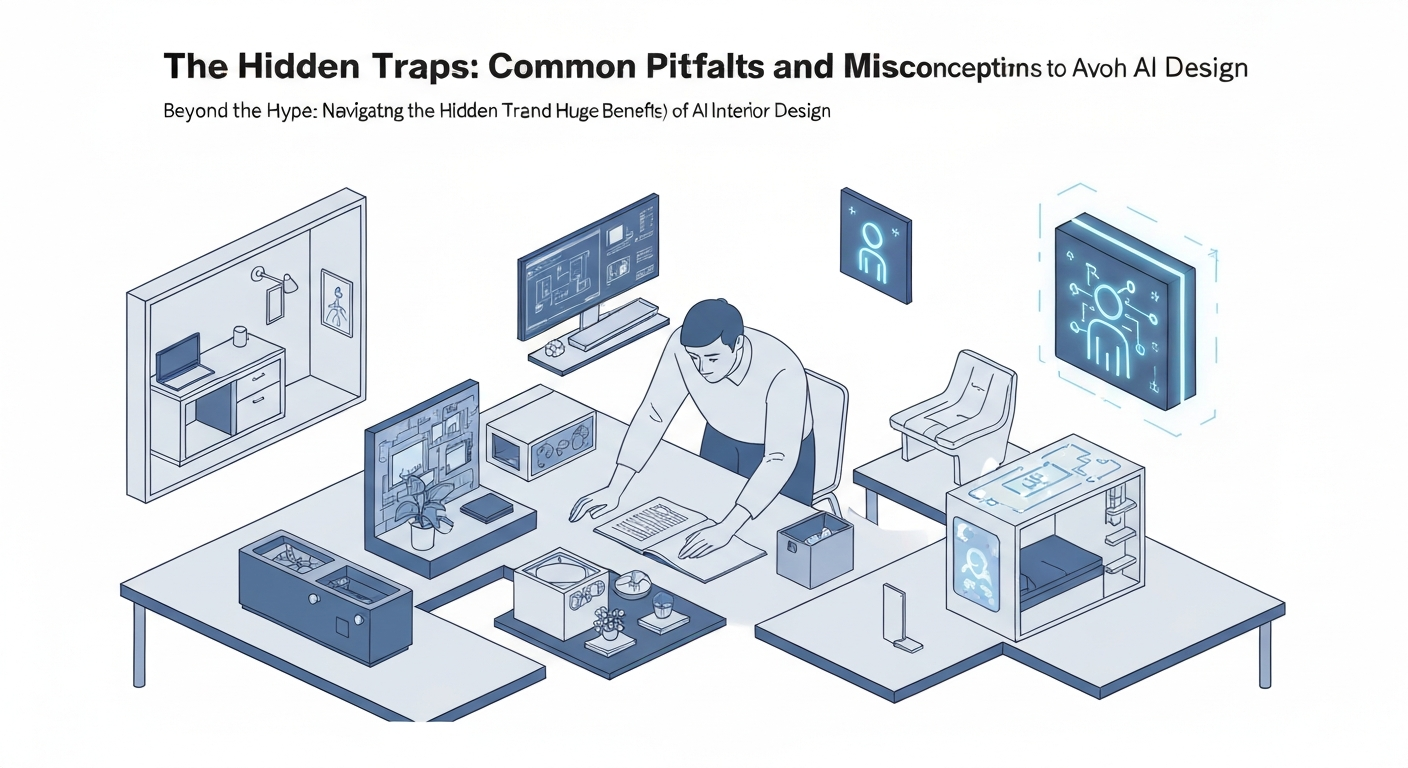
While AI-generated room visuals often look stunning, a significant trap lies in their impracticality. Many designs, while aesthetically pleasing on screen, prove difficult or impossible to execute in real Canadian homes. For instance, an AI might suggest a custom-built, curved sofa that doesn't exist commercially in Vancouver, or place a floor-to-ceiling window in a Toronto semi-detached house where a load-bearing wall makes it structurally unfeasible. This disconnect between digital fantasy and real-world constraints often leads to user disappointment. Another major problem with AI home design is its inherent lack of personal touch. An algorithm cannot truly understand the emotional connection a family has to a grandmother's antique armoire or the specific light quality in an East Coast cottage. The output can feel generic, missing the "soul" that human designers bring by interpreting complex lifestyle nuances. As one kindergarten administrator in Toronto observed,"AI can show me pretty pictures, but it can't tell me why a space *feels* right for my family."This limitation means designs might lack the unique character essential for a truly personalized home. Beyond the hype, users frequently encounter hidden costs of AI interior design tools. Many platforms lure users with free trials, only to gate essential features like high-resolution renders or additional design variations behind subscription models or paywalls. This can inflate the perceived savings, making users feel they need to hire a human designer anyway to refine the AI's output. Furthermore, research indicates that less than 30% of users fully understand the terms of service for many AI tools, raising significant concerns about data privacy and who actually owns the AI-generated designs. Navigating these hidden traps requires a thoughtful, informed approach to ensure AI truly serves your design goals without compromising practicality or privacy.
Beyond the Algorithm: Understanding AI's Limitations and Ethical Considerations
Beyond the Algorithm: Understanding AI's Limitations and Ethical Considerations
While AI offers exciting possibilities for interior design, an uncritical embrace can lead to generic outcomes or unforeseen issues. The real challenge, often overlooked in the rush to adopt new tech, lies in understanding what AI simply cannot do and the ethical questions it raises. This moves us Beyond the Hype: Navigating the Hidden Traps (and Huge Benefits) of AI Interior Design.
AI struggles with the subjective, emotional aspects that make a house a home. For example, an AI tool might suggest a minimalist Scandinavian aesthetic for a living room in a semi-detached home in Edmonton, based on popular trends. However, it won't understand that the homeowner’s family cherishes a collection of vibrant Indigenous art, or that the natural light in that specific room, during a long Canadian winter, needs warmer tones to feel inviting. Human designers intuitively grasp these nuances.
"AI is a fantastic brainstorming partner, but it doesn't know the story behind my grandmother's armchair or how my kids actually use the mudroom. That's where human insight is irreplaceable." — Homeowner, Vancouver Island
Another major concern is algorithmic bias. AI models learn from vast datasets, which often reflect existing market trends, popular styles, or product availability from specific regions like the U.S. or Europe. This can lead to suggestions that are uninspired or lack cultural relevance for a family in, say, a diverse Toronto neighbourhood. An AI might consistently suggest furniture from a few large retailers, ignoring local artisans or unique Canadian-made pieces.
| AI Limitation | Real-World Impact |
|---|---|
| Nuance & Emotion | Designs lack personal story, cultural context, or emotional warmth. |
| Algorithmic Bias | Generic suggestions, limited material/supplier diversity, exclusionary aesthetics. |
| Data Privacy | Risk of personal home data exposure; less than 30% of users understand terms. |
| Environmental Footprint | Significant energy use for AI model training and operation. |
| Copyright Ambiguity | Unclear ownership of AI-generated designs for users and professionals. |
The privacy of your home data is also a significant ethical consideration. When you upload floor plans or photos to an AI design tool, how is that information stored and used? Industry reports indicate that less than 30% of users fully understand the terms of service for many AI tools, highlighting a critical data privacy gap. Furthermore, the environmental footprint of AI is rarely discussed; the energy consumed to train and run large AI models contributes to substantial carbon emissions, a factor that responsible design should consider.
Mastering the 'Human-in-the-Loop' Approach: Practical Strategies for Smart AI Use
Mastering the 'Human-in-the-Loop' Approach: Practical Strategies for Smart AI Use
The real power of AI in interior design isn't found in fully automated solutions, but in a smart "human-in-the-loop" approach. This strategy combines AI's speed and generative capabilities with your unique vision and practical judgment, moving Beyond the Hype: Navigating the Hidden Traps (and Huge Benefits) of AI Interior Design to truly personalized spaces.
Define Your Vision First
Before you even open an AI tool like iDecorAI or RoomGPT, clearly articulate what you want. What's your style – Scandi, industrial, or something unique? What functional needs does your living room in a semi-detached Toronto home have? How much are you willing to spend on a new sofa? Use AI as a brainstorming partner, not a primary decision-maker, to avoid generic outputs. About 40-50% of homeowners still prefer human oversight for final decisions, according to recent industry surveys.
Iterate and Refine
Treat AI-generated designs as initial sketches. A tool might offer 20 variations for your kitchen layout. Don't pick the first one. Explore the options, identify elements you like, and then use your judgment to refine. Perhaps the AI suggested a bold emerald green accent wall, but you prefer a more subtle sage. Apply those personal touches that an algorithm can't inherently understand.
Validate AI Suggestions
An AI might render a stunning room with a specific velvet armchair, but is it available in Canada? Does it fit your budget of $800? Always cross-reference AI suggestions with real-world feasibility. Check for furniture availability from local suppliers, material costs, and even structural implications in an older Montreal condo. Disappointment often stems from virtual perfection meeting practical impossibility.
Collaborate with Professionals
For complex renovations, structural changes, or final execution, a human interior designer or contractor is invaluable. They can translate AI concepts into actionable plans, navigate building codes in British Columbia, and address nuances like electrical outlets or plumbing. AI can reduce project timelines by 30-50% for initial stages, but human expertise ensures a safe, compliant, and well-executed final product.
By focusing on specific tasks where AI excels—like initial brainstorming, 3D visualization, or space planning—and integrating your critical judgment at every stage, you ensure your designs are both innovative and genuinely practical for
Choosing Your AI Co-Pilot: Selecting Tools That Deliver Real Value and Avoid Frustration
Choosing Your AI Co-Pilot: Selecting Tools That Deliver Real Value and Avoid Frustration
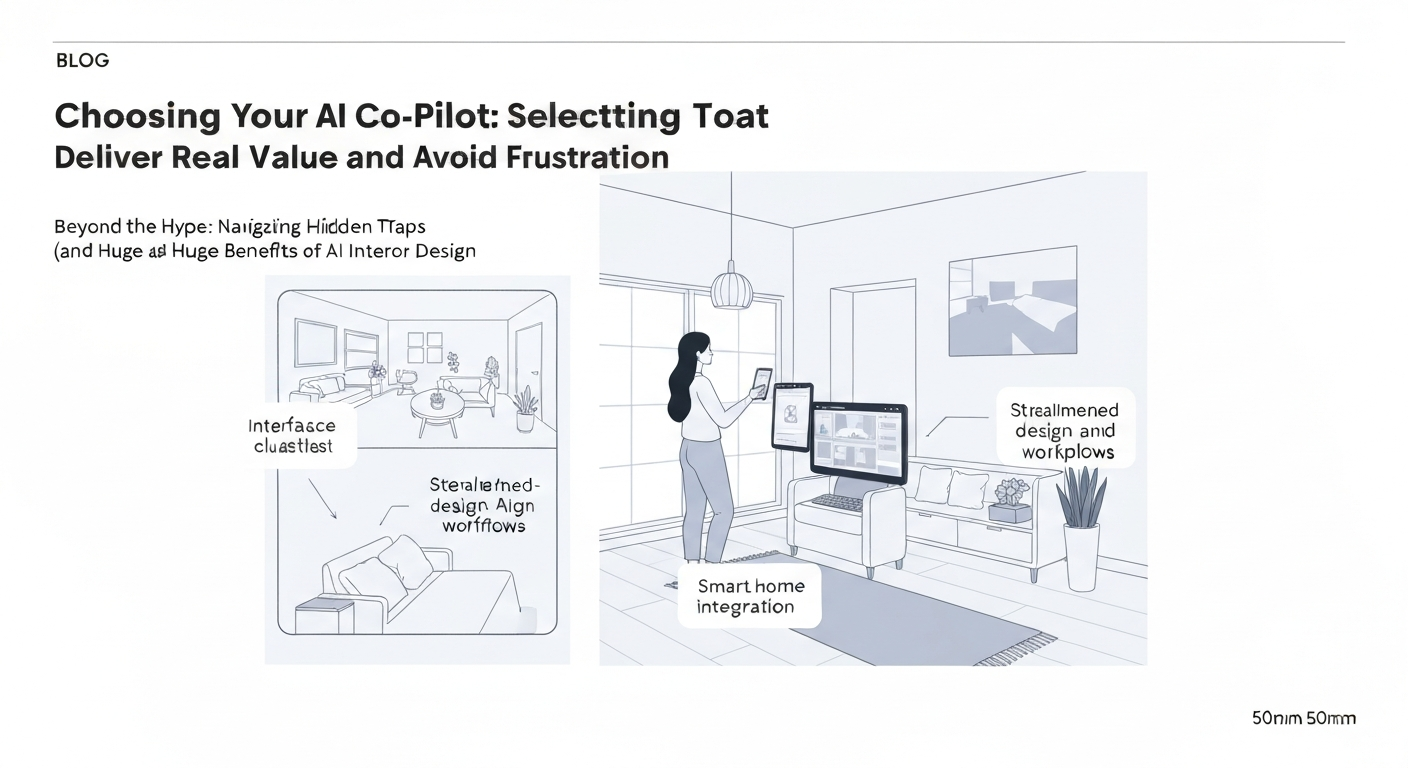
Navigating the sheer volume of AI interior design tools can feel like sifting through a home show full of shiny, new gadgets. The real challenge, often overlooked, isn't just finding a tool, but choosing one that genuinely serves your needs without introducing more headaches than it solves. Many homeowners jump into the first free trial, only to discover limitations or hidden costs later, a key trap when moving *Beyond the Hype: Navigating the Hidden Traps (and Huge Benefits) of AI Interior Design*. Before you commit, clarify your core needs. Are you seeking basic inspiration, detailed 3D floor plans for a semi-detached in Calgary, or material suggestions for a condo renovation in Vancouver? Tools like iDecorAI excel at rapid visualization and style matching, while others, such as Planner 5D, focus more on detailed spatial planning. Understanding these distinctions prevents paying for features you'll never use."The biggest frustration for our clients isn't just a bad design, it's a design they can't actually build because the furniture isn't available or the colours look completely different in real life." — Lead Designer, Boutique Interiors Inc., MontrealRealism and accuracy are paramount. Some tools generate beautiful but ultimately impractical images. Look for high-quality rendering that realistically depicts textures, lighting, and Canadian specific elements like natural light in winter. A 2023 industry report highlighted that photorealism in AI-generated designs still varies widely, especially for complex textures like natural wood or specific fabrics. Prioritize tools that allow you to upload your own room photos and test specific products.
| Feature/Aspect | Basic AI Tool (e.g., Free Online Visualizer) | Advanced AI Tool (e.g., iDecorAI, RoomSketcher Pro) |
|---|---|---|
| Core Function | Quick style inspiration, simple room layouts. | 3D visualization, detailed floor plans, product integration, material suggestions. |
| Rendering Quality | Stylized, often less realistic; limited lighting effects. | Near photorealistic; accurate material textures and dynamic lighting. |
| Customization & Control | Limited input; generic outputs; less room for personal style. | Extensive user input; adjustable parameters; allows specific brand/product integration. |
| Pricing Model | Free with significant feature limitations; ads; low-res exports. | Tiered subscription; free trial often limited; high-res exports typically included. |
| Product Database | Generic furniture; often unavailable items. | Integrated with real-world retailers (e.g., Structube, EQ3, local Canadian suppliers). |
Future-Proofing Your Design: The Evolving Landscape of AI in Interior Design
Future-Proofing Your Design: The Evolving Landscape of AI in Interior Design
While current AI tools offer impressive visualizations, the real shift isn't just in better graphics; it's in how AI will fundamentally change our relationship with our living spaces. The market for AI in interior design is expected to grow by over 20% annually through 2030, meaning designers and homeowners must understand this rapid evolution.
Soon, AI will move past static image generation. We'll see tools that offer even more accurate photorealism and material simulation, precisely rendering the subtle sheen of quartz countertops or the texture of a wool rug under specific natural light conditions in a Vancouver condo. This leap will address a current pain point where virtual designs sometimes look great but don't translate realistically to a real room. Future AI will also enable hyper-personalization, learning from your daily habits to suggest adaptive changes. Imagine your smart home automatically adjusting lighting and furniture arrangements for a morning workout versus an evening movie night, based on learned preferences over months.
Beyond aesthetics, AI is poised to become a powerful ally in sustainable design optimization. Tools will recommend local, eco-friendly materials available in Atlantic Canada, calculate the embodied carbon of various flooring options, and even optimize window placements for passive heating and cooling in a semi-detached home in Montreal. This moves us beyond the hype, offering tangible benefits for the environment and your energy bill.
The role of the human designer will also evolve. Instead of fearing replacement, professionals will embrace enhanced human-AI collaboration. AI will act as an intuitive assistant, anticipating needs and proactively suggesting solutions—for example, flagging potential structural issues for a wall removal in an older Toronto home before a human even considers it. This requires a shift in design education, emphasizing critical thinking, ethical considerations, and the ability to effectively prompt and manage AI tools, rather than just traditional drafting skills.
Navigating the hidden traps and huge benefits of AI interior design will increasingly depend on this human-in-the-loop approach. Understanding how these tools learn and integrate into daily life will be key to creating truly personalized, practical, and sustainable spaces that adapt to future needs.
Frequently Asked Questions About AI Interior Design
Quick Answers to Your AI Design Questions
Many homeowners in Vancouver, Montreal, and across Canada are curious about AI's role in home design. Here are direct answers to common questions about using tools like iDecorAI, clarifying their benefits and limitations.
Your AI Interior Design FAQ
Absolutely, for inspiration and visualization. AI excels at generating hundreds of design variations in minutes, a task that would take human designers hours. Use it as a powerful assistant to explore layouts and colour palettes for your Toronto condo or Halifax semi-detached.
AI learns patterns from your inputs, but it lacks the emotional nuance of a human. While it can suggest styles based on your preferences, a human touch is crucial for truly grasping unique personal aesthetics – like that specific blend of Scandinavian minimalism and West Coast rustic you love.
Key issues include impractical designs (e.g., furniture that won't fit a standard Ottawa bedroom), a lack of personal connection, and potential hidden costs. For instance, some tools might suggest bespoke items unavailable at typical Canadian retailers.
Be highly specific with your prompts. Instead of "modern living room," try "a cozy, modern living room in a 1920s Montreal row house, featuring a gas fireplace, green velvet sofa, and warm wood tones." Then, integrate your own unique art or heirlooms to personalize the AI's output.
Costs vary widely. Many offer free basic versions, while premium subscriptions with advanced features can range from $10-$50/month, similar to other creative software. Always check for feature limitations and potential 'hidden costs of AI interior design tools' before committing.
No. AI is more likely to augment human designers, handling repetitive tasks and generating ideas. This frees up professionals in cities like Calgary and Vancouver to focus on creativity, complex problem-solving, and the deep client relationships essential for truly personalized spaces. Industry reports indicate that AI tools can reduce design project timelines by 30-50% for initial concept phases, allowing designers to focus on execution.
Understanding these points is crucial when navigating the hidden traps (and huge benefits) of AI interior design. While AI offers incredible efficiencies and creative boosts, its true value emerges when paired with human insight and decision-making, ensuring designs are not only beautiful but also practical and deeply personal.
Frequently Asked Questions
What does AI interior design really do for homeowners?
How can AI help me design my home's interior?
Why should I be careful when using AI for interior design projects?
Is AI interior design reliable or does it have limitations?
Can AI tools truly understand my personal design style?
Keep reading
All articles →
Visualize Your Dream Home: Zillow AI's Reality Check & How to Master It
Zillow's new AI tool goes beyond staging, democratizing the 'designer's eye' for house hunters. It allows you to test personal style against a property's bones, fundamentally shifting how you visualize your dream home.

Real-World Test: We Tried 13 AI Interior Design Tools So You Don't Have To (Here Are Our Top 3 Picks!)
The sheer volume of new AI interior design tools often complicates the design process for homeowners. Our Real-World Test of 13 platforms reveals which truly deliver actionable, budget-friendly plans.
Dream Home on a Budget & Timeline: AI for Faster, Affordable Redesigns
While many assume a personalized dream home requires a hefty budget, AI tools are fundamentally shifting this reality, acting as a personal project manager for your entire redesign. They provide a step-by-step blueprint that optimizes every phase, making your dream home a tangible goal.