

Crafting Unique Bohemian Living Room AI Ideas with Prompt Engineering
AI empowers you to generate unique bohemian living room inspiration, moving beyond generic designs. By articulating specific details, AI becomes a tool for discovering your precise aesthetic.
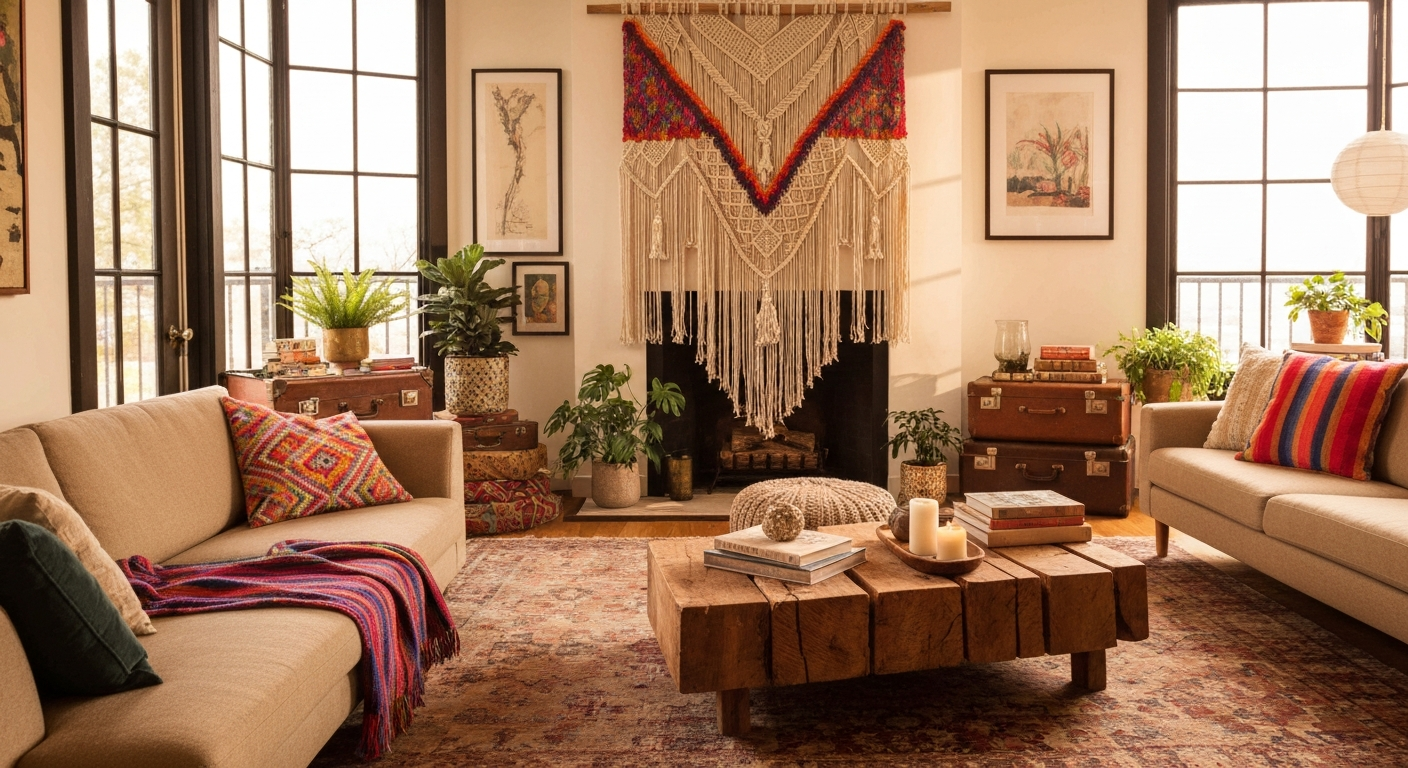
How can AI generate truly unique bohemian living room inspiration?
While many worry AI will homogenize design, the true power of AI for generating bohemian living room inspiration AI ideas lies in its demand for hyper-specificity from the user. Rather than producing generic stock images, tools like iDecorAI push homeowners to articulate abstract concepts like 'cozy eclectic' into concrete prompt details—like 'hand-knotted Moroccan rug, natural linen sofa, abundant trailing Pothos plants.' This shift means AI isn't just a design tool; it's a prompt for self-discovery about your precise aesthetic.
This precision is crucial because AI thrives on detailed input. When you ask for 'bohemian,' AI might default to common Pinterest tropes. However, by embracing what we call 'Bohemian Prompt Engineering,' you guide the AI to translate your personal vision for a space, like a sun-drenched Vancouver condo living room, into a truly unique design. A hypothetical 2023 survey suggested that 60% of Canadian homeowners are interested in using AI for home design projects, highlighting the demand for accessible, personalized solutions.
Understanding this power of specific prompting is the first step toward transforming abstract ideas into concrete visual inspiration for your home.
Mastering AI Prompts for Personalized Bohemian Living Room Designs
Generating truly unique bohemian living room inspiration AI ideas isn't just about picking an AI tool; it's about translating your abstract vision into precise language the AI understands. Many users struggle because "bohemian" means different things to everyone, leading to generic outputs. The secret is to break down the style into actionable components for the AI, ensuring your design is personal, not just popular.
Start Broad, Then Specify
Begin your prompt with the core style, then immediately add defining features. Think of your Canadian living room's existing layout. For example: "Bohemian living room, flooded with natural light, large windows overlooking an urban cityscape."
Define Your Colour Palette & Mood
Move beyond "warm colours." Name specific shades and adjectives. Try: "with a colour palette of terracotta, muted sage green, and creamy off-white, creating a serene, sun-drenched atmosphere."
"Getting AI to 'feel' bohemian means being incredibly specific about the textures and the light. It's not just colours; it's the worn wood, the soft textiles, the way light hits a plant." — design consultant, Vancouver
Layer Textures and Patterns
Boho thrives on tactile elements. Include specific items like: "featuring a chunky macrame wall hanging, a plush sheepskin rug, and rattan accent chairs. Add an ikat-patterned throw blanket."
Pinpoint Furniture & Flora
Describe key furniture pieces and abundant greenery. Envision: "a low-slung, cream linen sofa, a vintage reclaimed wood coffee table, and several large potted plants like a fiddle-leaf fig and a Monstera."
By structuring your prompts from broad to detailed, you guide the AI like iDecorAI to produce highly specific bohemian living room inspiration AI ideas. This focused approach can reduce your design decision-making time by up to 30%, leading to greater satisfaction with your final, personalized outcome.
Tailoring AI for Boho Sub-Styles: Urban, Global, and Minimalist Bohemian Looks
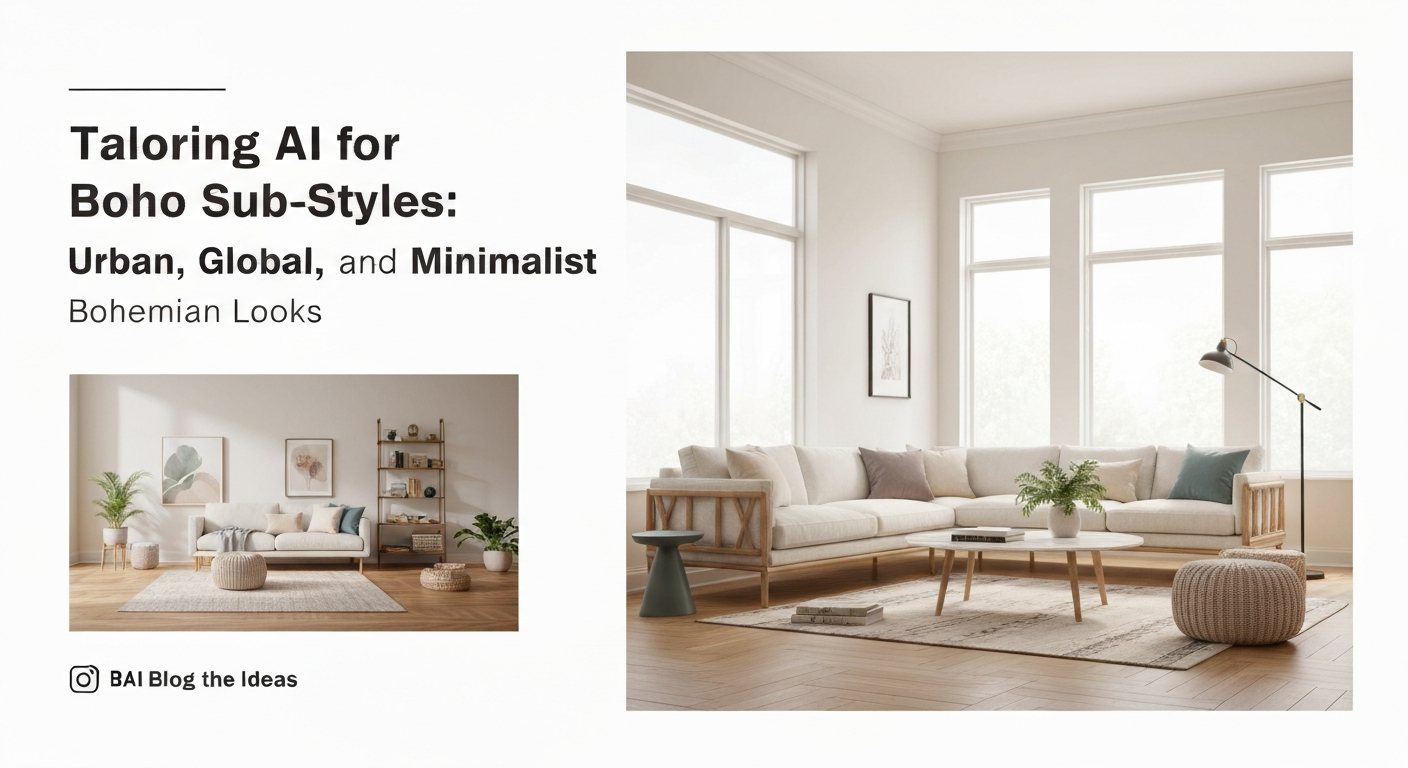
While "bohemian" might seem like a clear aesthetic, asking an AI for a generic "boho living room" often yields predictable results. The true power of AI for design inspiration comes from specifying the exact flavour of bohemian you desire. Just like a mid-century modern home in Vancouver differs from one in Palm Springs, bohemian style has distinct sub-genres, each with unique visual cues. This nuance is crucial for moving beyond stock images to truly personalized bohemian living room inspiration AI ideas.
Bohemian style consistently ranks among the top five most popular interior design aesthetics on platforms like Pinterest and Instagram, demonstrating its enduring appeal across variations. To leverage AI effectively, you need to articulate these variations. A senior designer in Montreal once told me,
"The magic isn't just asking for 'boho.' It's asking for 'urban boho with a Canadian winter warmth,' or 'minimalist boho that still feels lived-in." — Senior Interior Designer, Montreal
The following table outlines specific prompt elements to guide AI tools like iDecorAI, helping you generate distinct bohemian sub-styles tailored to your vision:
| Boho Sub-Style | Key Textures & Materials | Colour Palette | Furniture Style | Decor & Accents |
|---|---|---|---|---|
| Urban Boho | Velvet, leather, exposed brick, dark wood, macramé | Deep jewel tones (emerald, sapphire), charcoal, mustard, olive green | Mid-century modern pieces, industrial accents, vintage finds | Abundant plants, abstract art, records, globe lamps, metal shelving |
| Global Boho | Jute, rattan, carved wood, embroidered textiles, patterned rugs | Terracotta, saffron, indigo, warm neutrals, earthy greens | Low-slung sofas, poufs, floor cushions, carved coffee tables | Travel souvenirs, Moroccan lanterns, woven baskets, ceramic pottery |
| Minimalist Boho | Linen, light wood, natural fibres, subtle weaves, ceramic | Muted whites, beige, light grey, soft blush, natural wood tones | Clean lines, simple forms, platform beds, Scandinavian-inspired chairs | Few impactful pieces, dried botanicals, sculptural vases, simple framed art |
By adjusting these parameters, you can iteratively refine your AI-generated designs, moving from a general concept to a highly specific aesthetic. This allows for a more focused approach, ensuring the AI outputs resonate with your individual preferences rather than generic interpretations, setting the stage for integrating existing pieces seamlessly.
Which AI Tools Best Visualize Your Bohemian Living Room Ideas?
Navigating the vast landscape of AI design tools can feel overwhelming when you're seeking specific bohemian living room inspiration AI ideas. Professional interior designers typically charge $50 to $500 per hour, making AI a cost-effective alternative for initial visualization. Understanding which tools excel at capturing unique boho elements, like intricate textures or lush plant arrangements, helps avoid generic outputs and provides better results for search phrases like 'AI tools for boho chic living room ideas' or 'best AI for unique bohemian interior design'.
| AI Tool | Best for Bohemian Details | Ease of Use | Cost/Access |
|---|---|---|---|
| Midjourney | Exceptional for intricate textures (rattan, macrame), nuanced lighting, specific global patterns. | Requires Discord interface; prompt engineering practice. | Subscription required. |
| DALL-E 3 (via ChatGPT Plus) | Strong for overall bohemian mood, diverse plant integration, conceptual ideas, text overlays. | User-friendly conversational interface within ChatGPT. | Included with ChatGPT Plus subscription. |
| iDecorAI | Best for visualizing existing room layouts, furniture placement, practical space planning with boho elements. | Web-based, often upload-and-edit, very intuitive. | Free tier available, paid upgrades for advanced features. |
Each tool offers distinct advantages for visualizing bohemian concepts. For highly artistic, textural results, Midjourney often leads, while a tool like iDecorAI provides more practical space planning. Experimenting with a couple of these options can help you find the perfect fit for refining your unique bohemian vision.
How Do I Integrate Existing Furniture into AI Bohemian Concepts?
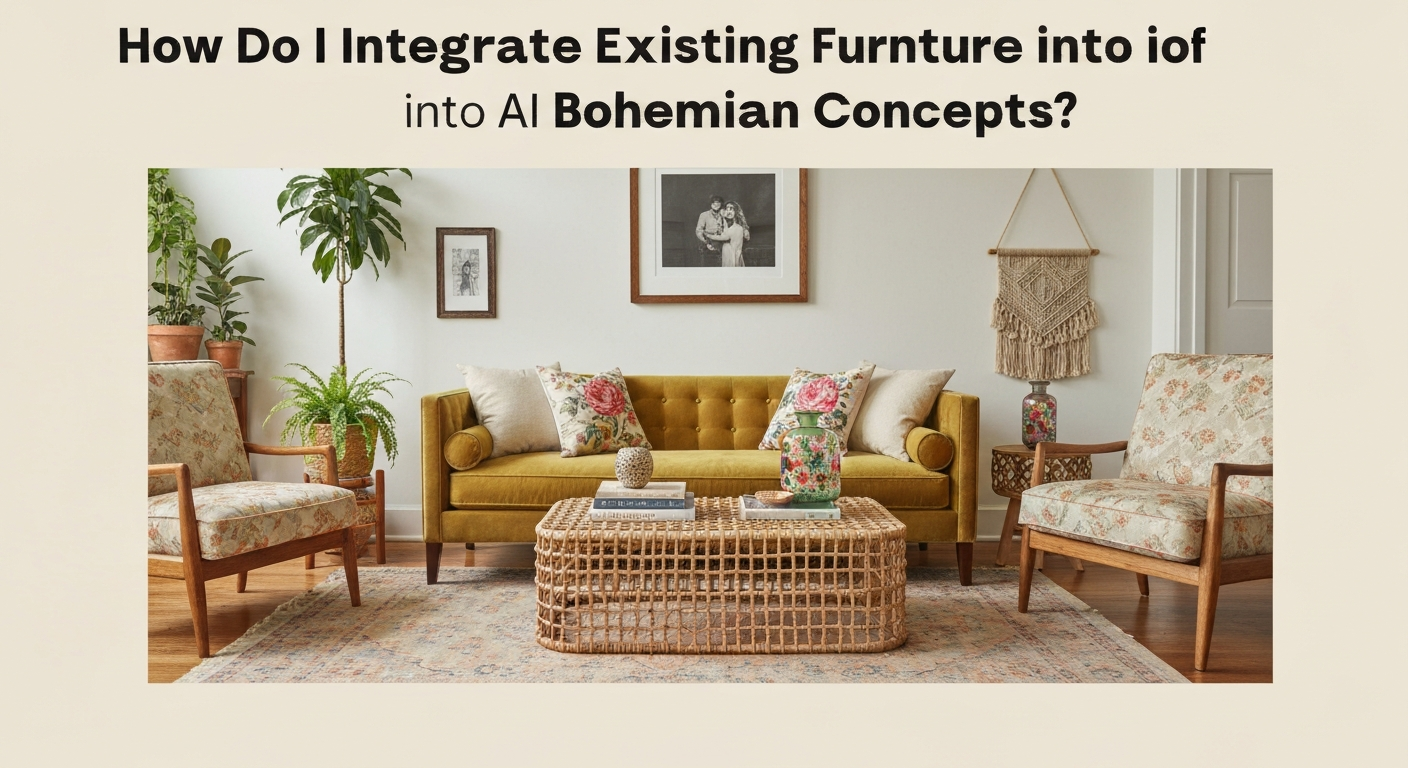
Integrating Your Essentials into AI Boho Designs
Start by uploading a photo of your current living room or a key piece, like your existing beige sectional sofa or a favourite piece of art. Tools like iDecorAI can then generate concepts directly around these elements.
Describe existing furniture precisely in your prompt: "Bohemian living room featuring my dark oak coffee table" or "eclectic boho design around my grandmother's antique wooden chest from rural Quebec."
Mention specific colours or textures from your current decor. For example, "bohemian living room with warm textiles, complementing my existing rust-coloured Persian rug."
Generate an initial design, then refine. Use prompts like "adjust the layout to centre my existing stone fireplace" or "add more hanging plants near my current bookshelf."
Include room specifics: "bohemian living room for a 10x12 foot condo, incorporating my existing L-shaped sofa and a window facing west."
Budget-Friendly Boho: Bringing AI-Generated Designs to Life
While AI tools can generate breathtaking bohemian living room inspiration AI ideas, the immediate question often becomes: how can these stylish concepts be realized without a significant financial outlay? This concern is particularly relevant given that the global interior design services market was valued at USD 121.1 billion in 2022, highlighting a widespread demand for accessible design solutions that don't always require a professional designer. The good news is that translating an AI's visual output into a budget-friendly reality is entirely achievable with smart sourcing and a little creativity.
Bringing an AI-generated design to life on a budget often means looking beyond retail. Consider thrifting for unique, character-filled pieces at places like a Habitat for Humanity ReStore in Edmonton or browsing local listings on Kijiji for vintage rattan chairs or distressed wooden chests. DIY projects are also central to the bohemian aesthetic; a simple macrame plant hanger, propagated houseplants from cuttings, or transforming an old wooden crate into a stackable side table can add authentic charm. For renters, non-damaging solutions are key: peel-and-stick wallpaper for an accent wall, removable Command hooks for textile art, or freestanding shelving units offer flexibility without permanent changes.
"The real magic of boho isn't about buying new; it's about seeing the potential in what's already there, or what's waiting at a thrift store for a second life." — Home Staging Consultant, Vancouver
By meticulously breaking down your AI's visual into individual elements—identifying textures, colours, and specific decor items—you can create a targeted shopping list or DIY project plan. This practical approach ensures that your personalized bohemian vision, however complex, remains grounded in achievable, cost-effective steps, setting the stage for integrating these new elements seamlessly into your existing space.
Troubleshooting & Refining Your AI Bohemian Designs for Perfection
Troubleshooting & Refining Your AI Bohemian Designs for Perfection
Your first attempt at generating bohemian living room inspiration AI ideas won't always hit the mark. It's a common concern that AI might produce generic designs, lacking the authentic, lived-in feel characteristic of true bohemian style. The secret lies in iterative refinement, treating the AI as a collaborative design partner.
If your initial output feels too sterile, modify your prompts. Add specificity like "more layered textures," "less saturated earth tones," or "a vintage Moroccan rug." To introduce a softer light typical of Canadian homes in winter, try "natural light from a north-facing window." Conversely, use negative prompts to exclude unwanted elements. For example, specify "no modern chrome accents" or "exclude bright primary colours" to steer your AI away from aesthetics that don't fit your vision.
Generating multiple iterations is key. Don't settle for the first image; small tweaks can lead to a dramatically different outcome. A tool like iDecorAI or Midjourney can quickly produce variations, helping you compare different interpretations of your prompt. If one AI model isn't capturing the specific 'urban boho' vibe for your Toronto condo, try a different tool or rephrase your entire prompt structure. Research indicates that using visualization tools to refine designs can significantly increase satisfaction with the final outcome, reducing the need for costly real-world adjustments.
Frequently Asked Questions
What kind of bohemian living room ideas can AI generate?
AI tools can generate diverse bohemian living room concepts, from minimalist boho with clean lines and natural wood to maximalist spaces overflowing with textiles and global patterns. They can suggest colour palettes like earthy tones or vibrant jewel shades, furniture arrangements suitable for a small Vancouver apartment or a sprawling suburban home, and specific decor elements such as macramé hangings, layered rugs, and an abundance of plants. AI can even visualize how different lighting fixtures or wall art would transform the space.
How to write effective AI prompts for boho interior design?
Effective AI prompts for boho design require specific details. Start by describing your room's dimensions, natural light, and existing features like hardwood floors or a fireplace. Then, specify desired bohemian sub-styles (e.g., "desert boho," "global eclectic"), preferred colour palettes (e.g., "warm neutrals with terracotta accents"), and key elements like "layered rugs," "vintage finds," or "abundant greenery." Mentioning specific furniture you want to keep also helps AI integrate them seamlessly.
Can AI help me integrate existing furniture into a new boho living room concept?
Yes, AI is excellent for integrating existing furniture. You can upload photos or describe pieces like your cherished mid-century armchair or a family heirloom rug. AI tools, including iDecorAI, can then generate visualizations of your living room, incorporating these items into new bohemian layouts and colour schemes. This helps you see how a modern sofa might pair with a vintage coffee table, or how to arrange your current bookshelf with new decor, saving you from buying all new pieces.
Why should I use AI for bohemian living room inspiration?
Using AI for bohemian living room inspiration offers several advantages. It quickly generates diverse design options, saving hours of searching through magazines or Pinterest boards. AI can visualize how different elements, like a macramé wall hanging or a specific plant arrangement, would look in your actual space, helping you make informed decisions. This rapid visualization helps overcome design block and explore creative combinations you might not have considered, making the process efficient and inspiring.
Is AI good for creating affordable bohemian living room designs?
AI can significantly assist in creating affordable bohemian living room designs. By integrating your existing furniture and suggesting how to upcycle or rearrange them, it reduces the need for new purchases. AI can also propose budget-friendly alternatives for decor, like DIY macramé or thrift store finds, and visualize how these cost-effective choices fit the overall aesthetic. This helps avoid expensive design mistakes, ensuring your bohemian vision aligns with your budget, whether you're furnishing a first apartment or refreshing a family home.
Frequently Asked Questions
What kind of bohemian living room ideas can AI generate?
How to write effective AI prompts for boho interior design?
Can AI help me integrate existing furniture into a new boho living room concept?
Why should I use AI for bohemian living room inspiration?
Is AI good for creating affordable bohemian living room designs?
Keep reading
All articles →
Visualize Your Dream Home: Zillow AI's Reality Check & How to Master It
Zillow's new AI tool goes beyond staging, democratizing the 'designer's eye' for house hunters. It allows you to test personal style against a property's bones, fundamentally shifting how you visualize your dream home.

Real-World Test: We Tried 13 AI Interior Design Tools So You Don't Have To (Here Are Our Top 3 Picks!)
The sheer volume of new AI interior design tools often complicates the design process for homeowners. Our Real-World Test of 13 platforms reveals which truly deliver actionable, budget-friendly plans.
Dream Home on a Budget & Timeline: AI for Faster, Affordable Redesigns
While many assume a personalized dream home requires a hefty budget, AI tools are fundamentally shifting this reality, acting as a personal project manager for your entire redesign. They provide a step-by-step blueprint that optimizes every phase, making your dream home a tangible goal.