

Your AI Home Furnishing Journey: From Vision to Cart, Step-by-Step
AI in home furnishing isn't about replacing designers, but democratizing the 'vision to cart' journey. It empowers you with professional insights, giving confidence to make informed choices for your home.
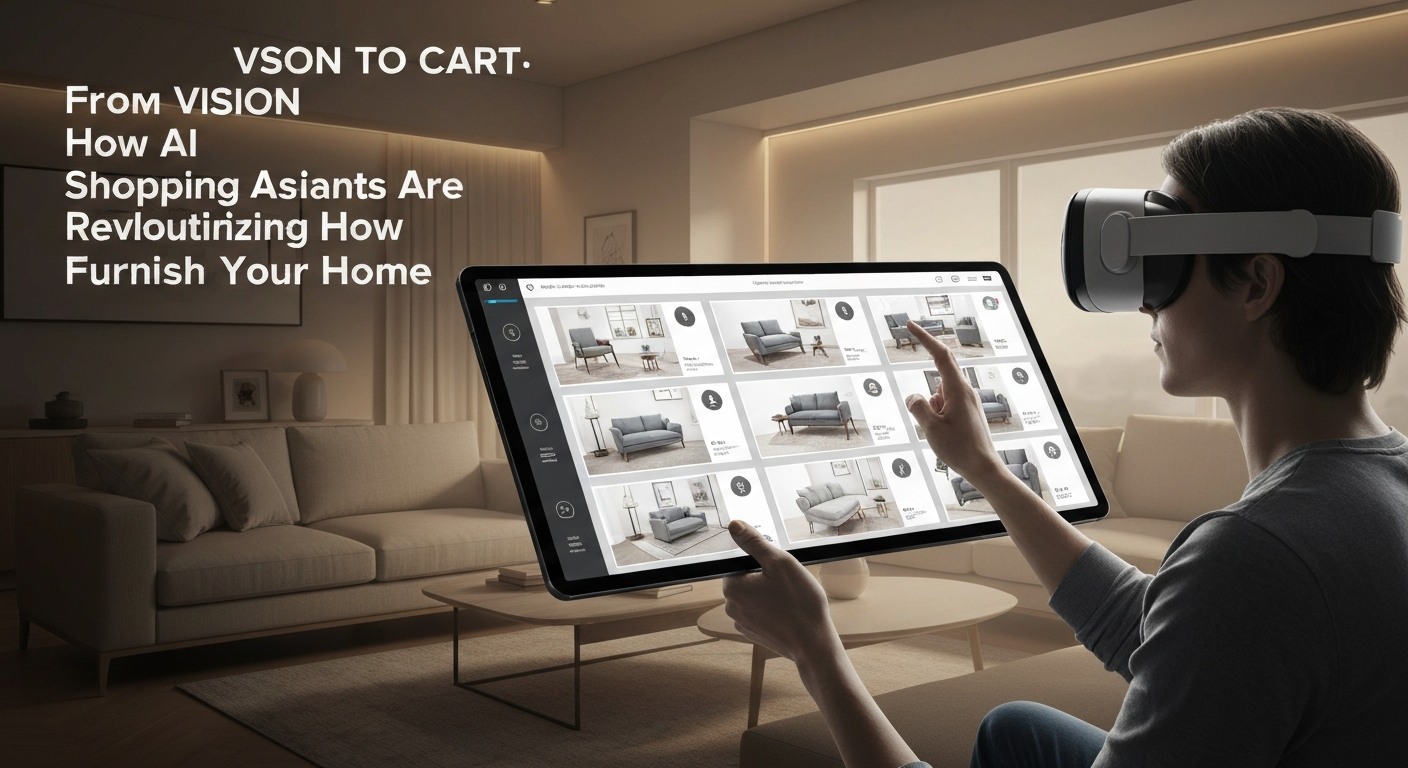
What Are AI Shopping Assistants for Home Furnishing?
While many assume AI in home furnishing is about replacing designers, its true revolution lies in democratizing the "vision to cart" journey, making professional-level insights accessible to anyone furnishing a Toronto condo or a Vancouver bungalow. From Vision to Cart: How AI Shopping Assistants Are Revolutionizing How You Furnish Your Home is less about AI making decisions for you, and more about giving you the confidence to make your own, informed choices.
These digital helpers use artificial intelligence to understand your preferences, analyze your space, and recommend furniture and decor. They simplify the complex and often overwhelming process of home furnishing, making it accessible and enjoyable for everyone. For instance, instead of sifting through hundreds of sofas online, an AI assistant can narrow options based on your living room's dimensions, your preference for mid-century modern, and your budget of $1,500, saving you potentially hours of research time, which, for the average homeowner, can be 10-15 hours for a major purchase.
The global AI in retail market, including home furnishing, is projected to reach over $19 billion by 2025, underscoring the rapid adoption and impact of these tools. This isn't just a niche trend; it's a significant shift in how Canadians approach home decor. By providing a structured, step-by-step approach, AI assistants empower users to make confident design decisions without feeling overwhelmed by countless options or the fear of making an expensive mistake, like ordering a sectional that won't fit through the door of a Montreal row house.
"Before AI tools, I'd stare at an empty room and feel paralyzed. Now, I can quickly visualize a few options and move forward with confidence." — First-time homeowner, Calgary
Ultimately, AI shopping assistants bridge the gap between abstract inspiration and practical purchasing. They translate your design dreams into actionable shopping lists, ensuring that the accent chair you love in a magazine spread will actually look great and fit perfectly in your St. John's apartment. This guided process reduces decision fatigue and helps you feel empowered, not intimidated, by the vast world of home decor, setting the stage for a seamless transition from visualization to actual purchase.
From Inspiration to Visualization: How AI Brings Your Vision to Life
The biggest hurdle for many Canadian homeowners isn't finding furniture, it's imagining how a new sofa or dining set will actually look and fit inside their living room or condo kitchen. AI-powered tools directly address this visualization gap, transforming abstract design ideas into concrete, realistic previews before you commit to a purchase, revolutionizing how you furnish your home.
Capture Your Space
Begin by simply using your smartphone or tablet to take a photo or scan your existing room. Apps like IKEA Place or iDecorAI can use this input to understand the room's dimensions, lighting, and current decor elements, whether it's a cozy den in a Vancouver townhouse or a spacious family room in a Calgary suburban home.
Virtual Furniture Placement with AR
This is where augmented reality (AR) shines. Instead of guessing, you can virtually "place" different furniture pieces from online catalogues directly into your room's live camera view. See how a new sectional fits against the wall, or if that accent chair obstructs the pathway in your Toronto semi-detached living room. This 'try before you buy' approach eliminates much of the guesswork.
Realistic 3D Previews
Beyond simple placement, AI tools render furniture in high-fidelity 3D, complete with accurate textures, shadows, and lighting. You can rotate items, change fabric colours, and even walk around the virtual pieces to get a true sense of scale and proportion. Industry data suggests that 3D visualization and AR in e-commerce can increase conversion rates by up to 40%.
"Seeing that oversized armchair virtually in my small condo living room saved me from a huge delivery and return headache. It just didn't fit the flow." — condo owner, Montreal
Eliminate Design Mistakes
The fear of making an expensive design mistake is a major barrier for many. By providing realistic previews, AI significantly boosts buyer confidence. This visual certainty not only improves satisfaction but also helps reduce product returns by as much as 25%, according to industry reports, benefiting both consumers and retailers.
This journey from vision to cart, powered by AI shopping assistants, moves past abstract mood boards to concrete,
Personalized Recommendations: AI as Your Smart Style Matchmaker
Personalized Recommendations: AI as Your Smart Style Matchmaker
The sheer volume of furniture options often paralyses decision-making, turning an exciting home project into a chore. Rather than sifting through endless online catalogues, AI shopping assistants now act as dedicated style matchmakers. They move beyond basic filters, learning your specific tastes to present a curated selection that truly resonates. Imagine furnishing a new condo in Gastown, Vancouver; instead of generic "modern living room" suggestions, the AI understands your preference for minimalist Scandinavian designs with pops of deep teal, based on your saved images and past purchases from retailers like EQ3 or Structube.
AI algorithms analyze your digital footprint: past purchases, browsing history, and even images of rooms you admire on sites like Pinterest or Instagram. This deep learning allows the AI to develop a nuanced understanding of your unique style preferences, from colour palettes to material textures. A recent survey indicated that over 60% of consumers are interested in using AI tools for personalized shopping experiences, reflecting a clear demand for recommendations that feel tailor-made, not just algorithmically generated. This personalization directly addresses the overwhelm, offering curated selections for your semi-detached home in the Annex, Toronto, rather than an endless, unfocused scroll.
"Before AI, I'd spend hours trying to find a sofa that fit both my tiny living room and my specific mid-century modern aesthetic. Now, the AI just shows me what actually works." — Interior Design Consultant, Calgary
Can AI recommend furniture based on your style? Absolutely. By continuously learning from your inputs and adapting its suggestions over time, these tools ensure a near-perfect match. They help you find pieces that complement your existing style, colour palette, and even the architectural nuances of your home, whether it's a century home in Halifax or a newly built townhouse in Ottawa. This intelligent matching capability is a core component of "From Vision to Cart: How AI Shopping Assistants Are Revolutionizing How You Furnish Your Home," streamlining the process from initial inspiration to a confident purchase, which we'll explore further in how AI brings your vision to life.
Budgeting and Smart Shopping: Finding the Best Deals with AI

Budgeting and Smart Shopping: Finding the Best Deals with AI
Many homeowners find themselves paralyzed by choice when furnishing a room, not because of too few options, but because of too many that don't fit the budget. The irony is that while countless online stores exist, sifting through them to find a stylish sofa within a $1,500 limit for a downtown Toronto condo can feel impossible. This is where AI shopping assistants truly shine, transforming the daunting task of budget-conscious decorating into a streamlined process.
AI tools like iDecorAI or even built-in features on retailer sites can filter furniture options based on your exact financial constraints. Need a new dining set for under $800 for your semi-detached home in Burnaby? The AI assistant ensures you only see items within that price range. Beyond simple filtering, these assistants compare prices across multiple retailers, pinpoint upcoming sales events, and even suggest alternative items that offer a similar aesthetic at a lower cost. This capability directly addresses the common pain point of struggling to find furniture that perfectly matches specific budget constraints, giving you confidence in your financial decisions.
The average Canadian homeowner dedicates 10 to 15 hours researching furniture before making a significant purchase, a statistic that underscores the sheer volume of effort involved. AI can drastically cut this time by offering curated, budget-friendly options upfront. This efficiency, coupled with the ability to compare prices and suggest alternatives, means less time sifting through endless tabs and more time enjoying your newly furnished space. This is a core part of From Vision to Cart: How AI Shopping Assistants Are Revolutionizing How You Furnish Your Home, making the entire process less about financial stress and more about smart, informed choices.
"Staying on budget is always the biggest hurdle for my clients. An AI assistant that can instantly show options within their price range, without me having to manually check every store, is a game-changer for project efficiency." — Interior Designer, Vancouver
The effectiveness of AI in connecting consumers with products at the right price point is not just a theory; industry data indicates that personalization driven by AI can lead to 10-15% revenue growth for companies that implement it effectively. This shows AI's strong capability in guiding users towards valuable purchases. By integrating budget parameters from the start, AI shopping assistants empower you to make financially sound decisions, reducing decision fatigue and ensuring your dream room doesn't break the
The 'Cart' Connection: Seamlessly Transitioning from Design to Purchase
The 'Cart' Connection: From Design to Delivered Decor
Once you've used an AI assistant to visualize a new sofa in your living room or a fresh colour palette for your bedroom, the next step is often the most frustrating: finding the exact items to buy. This is where AI truly streamlines the process, bridging the gap between your design vision and the practicalities of a confident purchase. Tools like iDecorAI, for example, don't just show you a beautiful room; they provide direct links to retailers for the specific furniture and decor pieces you've selected, often with style matches if the exact item isn't available. This minimizes the disconnect between inspiration and acquisition, a common pain point for the average homeowner who spends 10-15 hours researching furniture before a major purchase.
The entire journey, From Vision to Cart: How AI Shopping Assistants Are Revolutionizing How You Furnish Your Home, becomes remarkably efficient. Instead of endless browser tabs, your AI assistant consolidates chosen items into a single project plan. This means you can track multiple pieces – a new rug from Wayfair, a custom side table from a local artisan, and curtains from Amazon – all in one place. Before clicking 'buy,' however, always double-check dimensions provided by the retailer against your own measurements. While AI can suggest sizing, the final fit in your Toronto condo or Halifax semi-detached home depends on precise measurements. Pay close attention to shipping costs, delivery timelines (especially for larger items), and return policies, which are details often integrated into the assistant's guidance to help you avoid common online shopping pitfalls like unexpected fees.
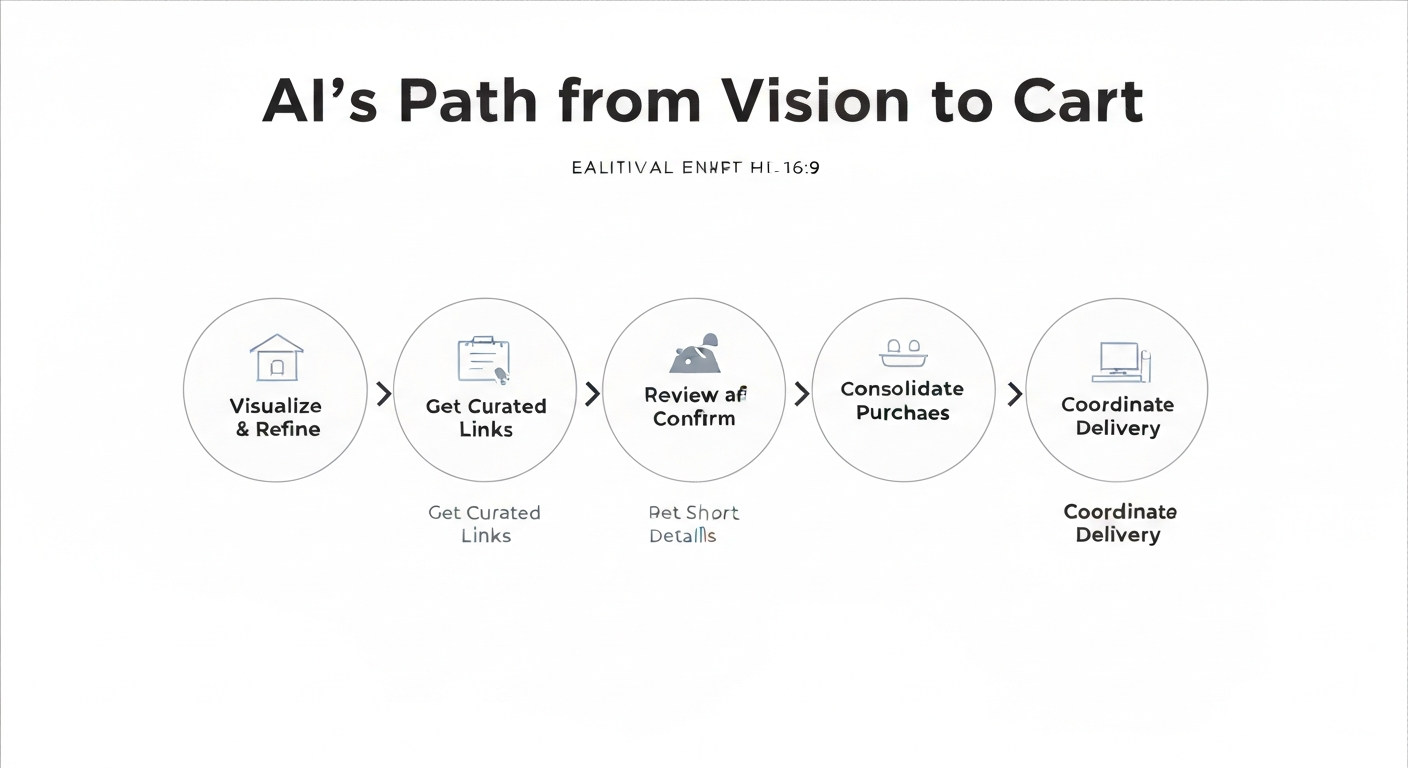
By offering this structured approach, AI assistants empower you to move beyond visualization to confident purchasing decisions. They help manage the logistics of furnishing, ensuring that the beautiful room you designed on screen becomes a tangible reality in your home, delivered right to your door.
Benefits of Using AI for Your Home Furnishing Journey
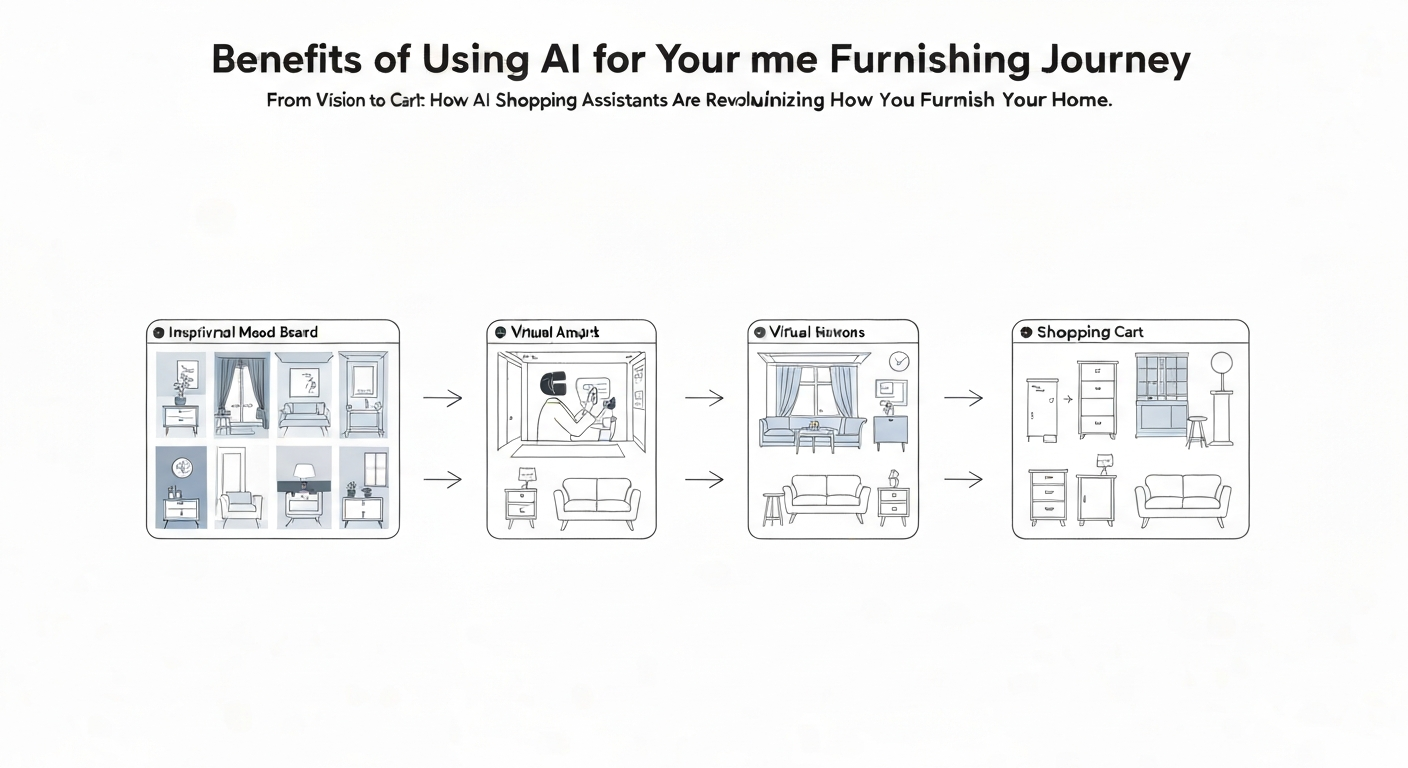
The Practical Upsides of AI in Your Decorating Project
While many homeowners approach decorating with a clear vision, the path from that initial spark to a perfectly furnished room often involves frustrating guesswork. AI shopping assistants bridge this gap, offering concrete benefits that streamline the entire process. Imagine redecorating a small condo living room in downtown Vancouver; instead of buying a sofa and hoping it fits, AI tools let you see that exact model in your space before it ever leaves the warehouse. This enhanced visualization, often through 3D or augmented reality, is a game-changer, with industry data suggesting it can reduce product returns by as much as 25% by boosting purchase confidence.
Beyond simply seeing furniture in your space, AI acts as a personal stylist and budget manager. It learns your preferences, from the cozy farmhouse aesthetic popular in rural Ontario homes to the sleek minimalist look of a Toronto townhouse, and then filters through countless options. This personalization tackles decision fatigue head-on, saving you the 10-15 hours the average Canadian homeowner spends researching furniture for a major purchase. Moreover, AI can pinpoint the best deals across various retailers, helping you achieve a stylish look for a family room in Calgary without overspending. This blend of personalized style and smart budgeting means you make informed choices, even when using new technology like iDecorAI for the first time.
Ultimately, these advantages empower you, the homeowner, to move from vision to cart with unprecedented confidence. The next step explores how AI transforms your initial design ideas into vivid, realistic previews, bringing your dream room closer to reality.
Choosing the Right AI Shopping Assistant for Your Needs
Choosing the Right AI Shopping Assistant for Your Needs
While the promise of AI-powered home furnishing is clear, not all assistants are created equal. The real trick to successfully moving From Vision to Cart: How AI Shopping Assistants Are Revolutionizing How You Furnish Your Home lies in picking a tool that matches your specific decorating pain points and preferences. For instance, a homeowner in a small Vancouver condo might prioritize tools with strong augmented reality (AR) features to ensure a new sofa actually fits their living room.
| Feature/Aspect | Best For... | Consider If You... |
|---|---|---|
| Augmented Reality (AR) Visualization | Seeing furniture in your actual space | Struggle to visualize sizes, colours, and how pieces will look next to existing decor. |
| Style Quizzes & Image Analysis | Personalized style matching & recommendations | Feel overwhelmed by choices or need help defining your aesthetic, especially if starting from scratch. |
| Budget Tracking & Price Comparison | Cost-effective shopping & deal finding | Have strict budget limits or want to ensure you're getting the best value across retailers. |
| Retailer Integration & Direct Links | Seamless purchase experience | Want to go directly from a design idea to adding items to a cart with minimal friction. |
Before committing, always check reviews for accuracy and data privacy policies. Some tools, like iDecorAI, offer broad functionality, while others might specialize in specific aesthetics, such as minimalist or Scandinavian designs. Understanding these distinctions ensures you pick an assistant that genuinely streamlines your furnishing journey, rather than adding another layer of complexity.
The Future of Furnishing: What's Next for AI in Home Decor?
The Future of Furnishing: What's Next for AI in Home Decor?
While AI already helps move your home furnishing from vision to cart, the next wave of innovation promises even more intuitive experiences. Imagine AI not just reacting to your style, but anticipating it. For instance, a system might suggest child-friendly furniture options for a Toronto couple expecting their first baby, or recommend durable, easy-to-clean fabrics for a family adopting a new puppy, based on predictive lifestyle changes.
Deeper integration with smart home systems is also on the horizon. Your AI assistant could recommend a sofa whose colour perfectly complements your smart lighting's evening glow, or suggest a desk that integrates seamlessly with your existing smart thermostat and air purifier setup, optimizing both aesthetics and functionality. This means furniture recommendations will consider not just visual appeal, but how pieces interact with your connected devices and environmental controls within a typical Canadian home.
"Soon, AI won't just show me what I like; it will show me what I need before I even know I need it. That's the real magic." — Homeowner, Vancouver Island
Advancements in AI will also enable sophisticated material and texture simulations. Instead of just seeing a photo of a velvet armchair, you might experience its tactile quality virtually, understanding how light catches the fibres or how it feels to the touch, all before it arrives at your semi-detached home in Calgary. This level of realism, driven by improved rendering, will significantly reduce the uncertainty that often accompanies online furniture purchases, addressing a key pain point for many homeowners.
The role of the 'human touch' will evolve, not diminish. AI will empower interior designers, giving them tools to iterate designs faster and present hyper-realistic concepts to clients. For consumers, AI will act as a design collaborator, helping to refine personal style and make confident choices, rather than dictating them. Industry reports indicate that 3D visualization and augmented reality (AR) in e-commerce can increase conversion rates by up to 40%, confirming the power of these visual aids in building purchase confidence.
Ultimately, continued growth in AI-driven personalization will ensure every home reflects its inhabitants uniquely. AI will learn from your evolving tastes, your family's needs, and even local trends in neighbourhoods like Montreal's Plateau, providing recommendations so refined that your home truly feels one-of-a-kind.
Your AI Home Furnishing Questions Answered
Many homeowners wonder how AI tools truly integrate into the furnishing process, especially when moving from a design vision to a final purchase. It's a common hurdle, from visualizing a new sofa in a small Vancouver condo to picking the right accent chair for a sprawling Calgary home.
Your AI Home Furnishing Questions Answered
Highly accurate. AI tools use advanced AR (augmented reality) and 3D modeling. For example, you can see a virtual sectional sofa appear in your actual living room via your phone camera, showing precise scale against your existing walls and furniture. This reduces purchase uncertainty, which industry reports suggest can cut product returns by up to 25%.
Yes, AI learns iteratively. By analyzing images you upload (like a favourite Pinterest board or photos of your current decor), tracking your "likes" on suggested items, and asking clarifying questions, AI becomes a sophisticated style matchmaker. Over 60% of consumers seek personalized shopping experiences, a demand AI directly addresses.
Reputable AI assistants adhere to strict data privacy policies. Always check a platform's terms of service regarding data usage and security. For instance, a well-known app like IKEA Place clearly outlines how it uses your room scans solely for visualization, not for broader data mining.
No, they augment the design process. AI offers powerful tools for visualization and personalization, letting you experiment with countless layouts and colours. However, human creativity, understanding of complex spatial challenges, and emotional connection remain invaluable for projects like a full home renovation or custom-built spaces.
Begin by downloading a popular AI home furnishing app, such as Wayfair's "View in Room" feature or the Ashley HomeStore app. Upload photos of your space, or use the live camera view, and start experimenting with virtual placements and personalized recommendations. This is a key step in the journey From Vision to Cart: How AI Shopping Assistants Are Revolutionizing How You Furnish Your Home.
These tools demystify the furnishing process, turning overwhelming choices into manageable, personalized suggestions. They streamline the 10-15 hours the average homeowner spends researching furniture, making the path from an initial idea to a confident purchase much clearer and more efficient.
Frequently Asked Questions
What exactly are AI shopping assistants for home decor?
AI shopping assistants for home decor are digital tools that use artificial intelligence to help you design and furnish your living spaces. They analyze your style preferences, existing room photos, and layout dimensions to suggest furniture, paint colours, and accessories. These platforms often integrate product catalogues from various retailers, making it easier to discover items that match your vision and fit your budget. They act as a personalized guide, simplifying the often overwhelming process of decorating a home.
How can AI help me visualize furniture in my home before buying?
AI tools offer powerful visualization features, often using augmented reality (AR) or 3D rendering. You can upload a photo of your room or use your smartphone's camera to virtually place furniture and decor items into your actual space. This allows you to see how a new sofa will look in your living room or if a specific rug complements your existing flooring, all before making a purchase. This eliminates guesswork and helps confirm design choices, reducing buyer's remorse.
Why should I use an AI assistant when furnishing my home?
Using an AI assistant streamlines the home furnishing process significantly. It saves time by filtering through countless options to present only relevant items that align with your style and room dimensions. These tools help prevent costly design mistakes by allowing visualization beforehand and ensure a cohesive look across your space. For instance, iDecorAI can quickly generate mood boards, making decision-making faster and less stressful for busy Canadians decorating a new condo or refreshing a family home.
Can AI shopping tools help me find affordable furniture and deals?
Yes, many AI shopping tools are excellent for finding affordable furniture and deals. They can scan product listings across numerous retailers, comparing prices for similar items and identifying current sales or promotions. Some platforms allow you to set budget filters or receive alerts when desired items go on sale. This capability helps users in cities like Montreal or Vancouver find stylish pieces that fit their budget without extensive manual searching, ensuring value for money.
Is it easy to purchase items directly from AI home design platforms?
Purchasing items directly from AI home design platforms varies by tool. Many platforms function primarily as discovery and visualization tools, providing direct links that redirect you to the retailer's website to complete the purchase. Some advanced platforms integrate shopping carts, allowing a more seamless checkout experience for items from multiple brands. Generally, the process is designed to be straightforward, minimizing friction once you've made your design decisions and are ready to buy.
Frequently Asked Questions
What exactly are AI shopping assistants for home decor?
How can AI help me visualize furniture in my home before buying?
Why should I use an AI assistant when furnishing my home?
Can AI shopping tools help me find affordable furniture and deals?
Is it easy to purchase items directly from AI home design platforms?
Keep reading
All articles →
Visualize Your Dream Home: Zillow AI's Reality Check & How to Master It
Zillow's new AI tool goes beyond staging, democratizing the 'designer's eye' for house hunters. It allows you to test personal style against a property's bones, fundamentally shifting how you visualize your dream home.

Real-World Test: We Tried 13 AI Interior Design Tools So You Don't Have To (Here Are Our Top 3 Picks!)
The sheer volume of new AI interior design tools often complicates the design process for homeowners. Our Real-World Test of 13 platforms reveals which truly deliver actionable, budget-friendly plans.

Dream Home on a Budget & Timeline: AI for Faster, Affordable Redesigns
While many assume a personalized dream home requires a hefty budget, AI tools are fundamentally shifting this reality, acting as a personal project manager for your entire redesign. They provide a step-by-step blueprint that optimizes every phase, making your dream home a tangible goal.