

AI Interior Design Traps: Smart Redesigns with Human-Led AI
The real challenge in AI interior design isn't adoption, but preventing aesthetically bland, functionally awkward homes. Learn how to use AI as a powerful assistant, not an autonomous decorator, for truly smart and personalized home redesigns.
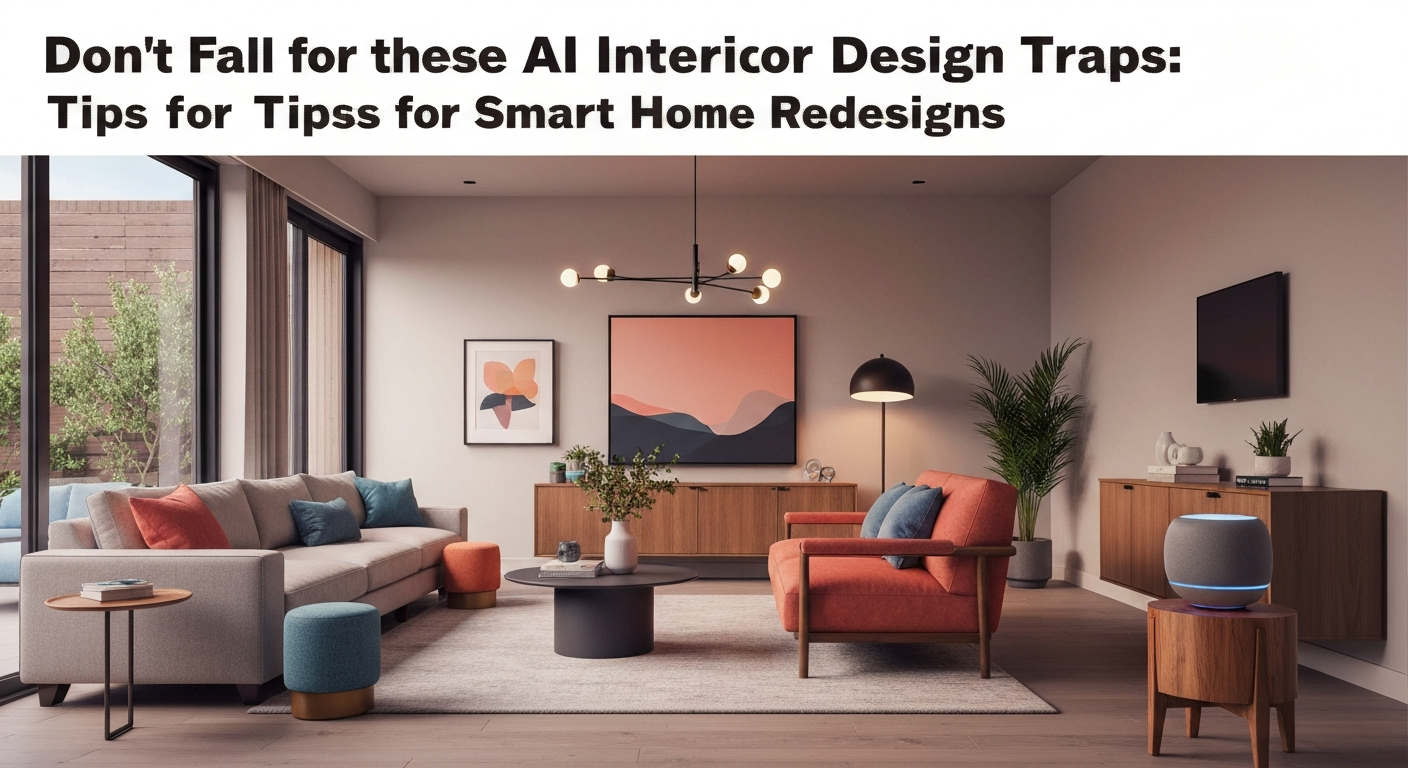
Introduction: Navigating the AI Interior Design Revolution
The Human Touch in an AI-Driven Home
While the global AI in interior design market is projected to grow by over 20% annually, the real challenge isn't adoption, but rather preventing a wave of aesthetically bland, functionally awkward homes. Many Canadian homeowners, about 50% according to recent interest surveys, are keen to use AI for design but often find initial outputs lack personal flair or practicality for spaces like a Toronto semi-detached living room. Don't Fall for These AI Interior Design Traps: Tips for Smart Home Redesigns means understanding that AI is a powerful assistant, not an autonomous decorator, especially when designing for specific needs like a family with young children in a Vancouver condo.
The allure of instant design concepts from tools like iDecorAI or RoomGPT is undeniable. Yet, without human oversight and clear direction, these tools frequently produce generic layouts or suggest materials ill-suited for Canada's diverse climate, such as delicate fabrics for a mudroom in an Ottawa winter. Our 'Human-Led AI' playbook helps homeowners in places like Calgary or Montreal master these tools, ensuring their redesigns are smart, deeply personal, and practical for everyday living.
This guide empowers you to overcome common problems with AI home design. You'll learn how to refine AI suggestions, inject your unique style, and ensure the final vision aligns with your budget and lifestyle. Make AI a powerful assistant, not a replacement for your vision, transforming your home into a space that truly reflects you.
Understanding the Pitfalls: Why These AI Design Traps Matter
Understanding the Pitfalls: Why These AI Design Traps Matter
Many homeowners jump into AI design tools expecting a finished, personalized room with one click, only to find the initial outputs generic and cold. Industry reports indicate that roughly 40-50% of users feel their first AI-generated designs lack a unique personal touch, often resembling a showroom rather than a lived-in Canadian home. This "Generic Look" Syndrome is a primary reason why simply using AI without human direction often disappoints, especially for spaces like a cozy Vancouver condo living room or a bustling family kitchen in Halifax.
Over-reliance on AI without human oversight also risks impractical or costly outcomes. Imagine an AI suggesting an expansive custom built-in for a tiny Toronto semi-detached house, or recommending rare, imported materials that blow a typical renovation budget by 30%. While tools like iDecorAI offer great starting points, they don't inherently understand local building codes, specific family needs, or the nuances of Canadian weather affecting material choices. Understanding these limitations is the first step toward mastering AI as a collaborative partner, not a magic wand.
"AI gives you a great first draft, but it's like a painting with no soul. You have to add the brushstrokes that make it yours." — senior interior designer, Montreal
Recognizing these inherent challenges is crucial for anyone looking to Don't Fall for These AI Interior Design Traps: Tips for Smart Home Redesigns. We'll now explore how these common pitfalls manifest in real-world scenarios and provide actionable strategies to navigate them, ensuring your AI-assisted design journey leads to a truly personalized and functional home.
Trap 1: The 'Generic Look' Syndrome – How to Inject Personality into AI Designs
The "Generic Look" Syndrome: Giving AI Designs a Soul
Many homeowners discover that initial AI-generated designs, while visually appealing, often lack a distinct personality, making their living spaces feel more like a furniture showroom than a personal sanctuary. This common trap means your newly "designed" Toronto condo or Halifax semi might end up looking like countless others, missing the unique touches that make a house a home.The Promise of AI Design
- Rapid Visualization: Quickly generates multiple design concepts for a living room or kitchen.
- Trend Awareness: Incorporates current popular styles, like Scandinavian minimalist or Japandi.
- Layout Exploration: Efficiently tests various furniture arrangements in a small space.
- Accessibility: Offers design tools to those without professional design budgets.
The Generic Pitfall
- Lack of Personal Narrative: Fails to integrate personal history, heirlooms, or sentimental items.
- Over-Reliance on Stock Images: Often pulls from common design databases, leading to predictable outcomes.
- Emotional Disconnect: Struggles to capture a specific "feeling" or "vibe" beyond basic aesthetics.
- Homogenized Aesthetics: Can produce designs that feel interchangeable across different homes.
"If you just type 'modern living room,' you'll get a modern living room. But if you tell it 'a cozy, sunlit modern living room with space for my vintage record player and a touch of West Coast rustic,' that's when the magic happens." — interior designer, Vancouver IslandTo avoid falling for
Trap 2: Functionality Fails – Ensuring AI Designs Work in Your Real Home
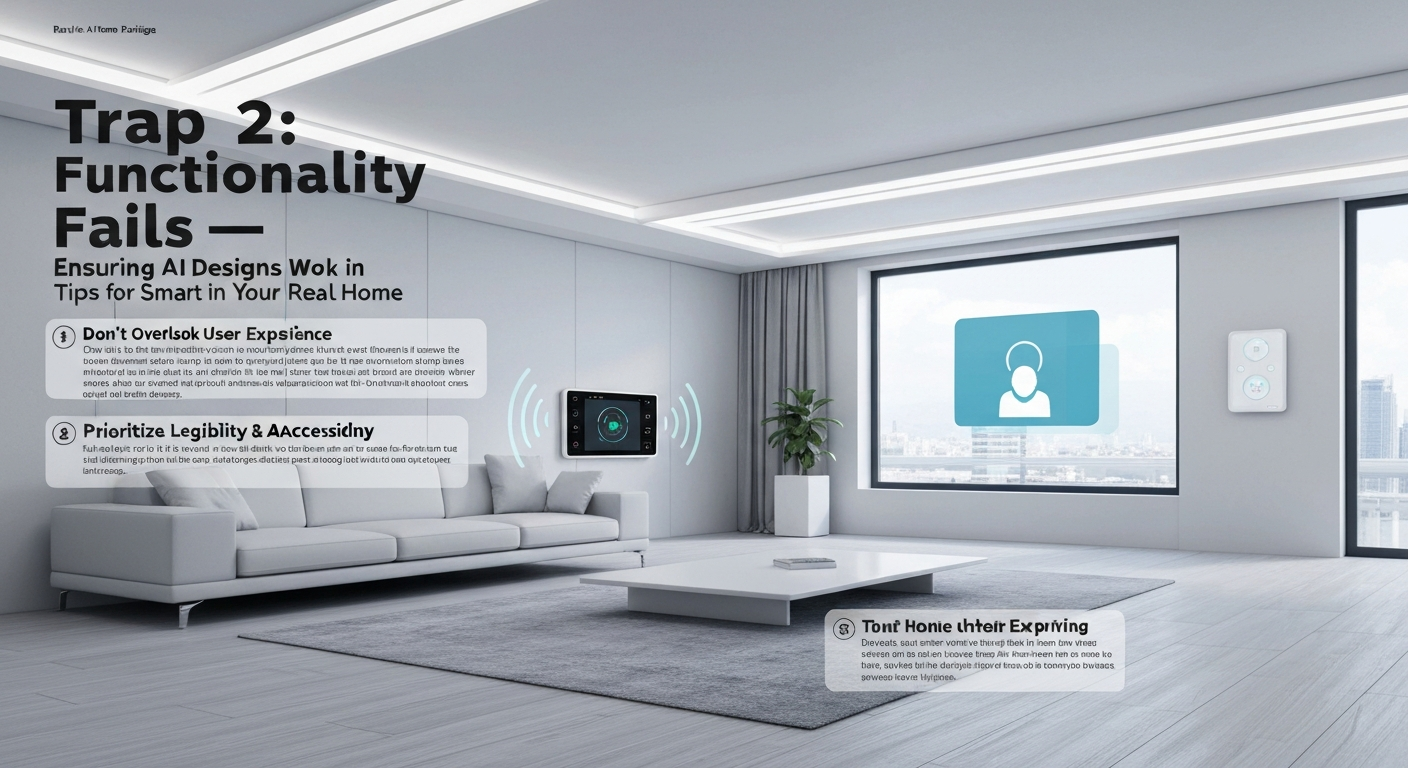
Functionality Fails: Ensuring AI Designs Work in Your Real Home
AI can generate stunning visuals, but a beautiful image doesn't always translate into a practical living space. Many homeowners discover that AI suggestions, while aesthetically pleasing, often overlook crucial real-world constraints like furniture scale or material suitability for a Canadian climate, leading to common problems with AI home design.
AI's Strengths in Layout Planning
- Rapidly generates diverse layout options for a 1-bedroom condo in Vancouver.
- Visualizes furniture placement, like a sectional sofa in a tricky living room corner.
- Suggests optimal traffic flow paths, highlighting potential bottlenecks.
- Offers material palettes that complement a chosen style, e.g., Scandinavian minimalism.
Common AI Functional Blind Spots
- Recommends an oversized dining table for a typical Toronto semi-detached home.
- Suggests delicate fabrics for a family room with young children and pets.
- Ignores HVAC vents or electrical outlets, placing furniture over them.
- Proposes materials like unsealed concrete floors unsuitable for harsh Alberta winters without proper insulation.
To avoid falling for these AI interior design traps, prioritize real-world constraints. Measure your space meticulously and visualize daily activities. Use AI tools like iDecorAI as an iterative partner, refining designs with specific feedback such as "shorten the kitchen island by 30cm" or "add closed storage near the entrance for winter gear," a process that studies suggest can improve satisfaction rates on creative projects by up to 60%.
Trap 3: Budget Blowouts and Material Mismatches – Aligning AI Visions with Reality
Budget Blowouts and Material Mismatches: Aligning AI Visions with Reality
One major pitfall when using AI for home redesigns is its tendency to suggest luxurious finishes or rare materials without considering your actual budget or local availability. This can lead to frustration and costly mistakes, making you feel like your dream design is out of reach.
Smart Budgeting with AI
- Explicitly state budget limits: Prompt AI with phrases like "design a family-friendly kitchen under $25,000 using durable, easy-to-clean materials available in Alberta."
- Prioritize local availability: Specify regions or types of suppliers (e.g., "materials found at Home Depot or RONA").
- Explore cost-effective alternatives: If AI suggests a pricey marble, ask it for "similar aesthetics using quartz or laminate" to find more affordable options.
- Reduce overruns: Industry reports indicate that explicitly stating budget limits in prompts can reduce cost overruns by an average of 30% compared to open-ended designs.
Common AI Budget Traps
- Unrealistic material suggestions: AI might recommend imported Italian tiles or custom millwork that are beyond a typical Canadian homeowner's budget.
- Ignoring installation costs: The tool often focuses on material price, not the labour costs for complex installations in a Toronto condo.
- Limited local supplier knowledge: AI typically lacks real-time inventory or pricing data for specific local hardware stores in, say, Vancouver Island.
- Overlooking shipping and duties: If AI suggests items from international retailers, it won't factor in cross-border fees.
To truly avoid these AI interior design traps, research local suppliers and material costs before finalizing your AI-generated designs. Integrate these real-world constraints into your initial prompts and use AI iteratively to refine your vision within practical financial boundaries.
Many homeowners excitedly use AI design tools only to realize their beautiful new space ignores existing smart home technology or future needs. This common pitfall can leave you with a stunning room that feels strangely disconnected from how you actually live, like a modern kitchen without a smart hub for appliances. The smart home market is projected to exceed $200 billion by 2026, making AI design integration a critical factor for long-term satisfaction. To avoid this, don't fall for these AI interior design traps: tips for smart home redesigns must include specifying features like "a smart kitchen with integrated voice-controlled lighting and appliance hubs" directly in your prompts, ensuring a truly future-proof space. Handing over complete creative control to an AI can leave you with a beautifully rendered space that still feels empty or impersonal. This common pitfall in AI interior design often results in a home that doesn't reflect your unique story or lifestyle, making you feel detached from your own living environment. To avoid this trap, use AI as a powerful brainstorming partner—like tools such as iDecorAI for initial concepts—but always inject your personal touch. Remember, the goal is a unique home, not just a technically perfect rendering; don't fall for these AI interior design traps: tips for smart home redesigns truly emphasize your role as the lead designer. Understanding the common AI interior design traps before you start a project can save significant time and money. This table outlines the core challenges, effective avoidance strategies, and the potential impact if you don't fall for these AI interior design traps: tips for smart home redesigns. Beyond simply avoiding pitfalls, homeowners can proactively shape AI's output to create truly personalized and functional living spaces. The key is to approach AI as a collaborative partner, not a magic wand, ensuring your unique style shines through in every design element. Before launching any AI tool, sketch out your core desires. What mood do you want for your Calgary living room? What specific functions does your kitchen need? A clear blueprint, perhaps a physical mood board with fabric swatches and paint chips, helps you evaluate AI outputs against your pre-established goals. This prevents the "generic look" syndrome reported by up to 50% of initial AI users. Think like a director, not just a spectator. Instead of "design a bedroom," try "a cozy, minimalist primary bedroom in a 1920s Toronto semi-detached home, featuring a built-in window seat, natural wood tones, and soft indirect lighting." Detailed, iterative prompts are crucial for overcoming common problems with AI home design and guiding tools like iDecorAI towards your specific aesthetic. Treat AI as a conversation partner. Generate a design, review it, and then provide specific feedback for the next iteration. "Make the sofa smaller" or "change the wall colour to a warmer beige, like Benjamin Moore OC-147" are effective refinements. Studies suggest this human oversight and iterative process can improve satisfaction rates on AI-assisted projects by up to 60%. AI tools often generate aesthetically pleasing but generic designs lacking personal character or specific homeowner needs. They can overlook crucial practicalities like existing plumbing, window placements in a Vancouver condo, or the need for durable materials in a busy family home. Without human oversight, AI might propose layouts that are impractical for daily living or ignore local building codes, leading to costly modifications later. To avoid generic AI designs, use the tool as a brainstorming partner, not the final word. Start with AI-generated concepts, then layer in your unique personality. Incorporate cherished family heirlooms, local artwork from a Montreal gallery, or custom-built pieces that reflect your style. Experiment with unexpected colour combinations or textures. A senior designer in Calgary might use AI for initial layouts, then add specific vintage finds or custom millwork to truly personalize the space. Integrating smart home technology early ensures a seamless, functional living space. Planning for smart lighting controls, automated blinds, or integrated sound systems from the outset prevents unsightly wires and retrofitting challenges. For example, a new build in Ottawa can incorporate smart thermostats and security systems directly into the design, optimizing energy use and convenience. This forward-thinking approach enhances both the aesthetics and long-term usability of your home. AI tools like iDecorAI can suggest materials and finishes that align with specified budget tiers, offering initial cost estimates for items like flooring or cabinetry. They can also compare different material options, showing visual impacts and potential price differences. However, these are often general estimates. A homeowner in Halifax still needs to verify local supplier pricing, installation costs, and sales, as AI may not account for regional market fluctuations or specific contractor rates. Ensuring practicality requires human oversight and critical evaluation of AI designs. After generating concepts, visualize your daily routines within the proposed space: where will you store winter boots in a small Toronto condo? Is the kitchen layout efficient for meal prep? Consider traffic flow, furniture scale, and storage solutions. A design professional can identify potential bottlenecks or overlooked needs, adapting AI suggestions to create a truly livable and functional home environment. Zillow's new AI tool goes beyond staging, democratizing the 'designer's eye' for house hunters. It allows you to test personal style against a property's bones, fundamentally shifting how you visualize your dream home. The sheer volume of new AI interior design tools often complicates the design process for homeowners. Our Real-World Test of 13 platforms reveals which truly deliver actionable, budget-friendly plans. While many assume a personalized dream home requires a hefty budget, AI tools are fundamentally shifting this reality, acting as a personal project manager for your entire redesign. They provide a step-by-step blueprint that optimizes every phase, making your dream home a tangible goal.Trap 4: Ignoring Smart Home Integration – Future-Proofing Your Redesign
Trap 4: Disconnecting from Smart Home Integration
The Smart Approach
The Missed Opportunity
Trap 5: Over-Reliance and Loss of Control – Mastering Your AI Design Assistant
Trap 5: Over-Reliance and Loss of Control – Mastering Your AI Design Assistant
The Human-Led Approach
When AI Takes Over
Comparing the Traps: Impact and Avoidance Strategies
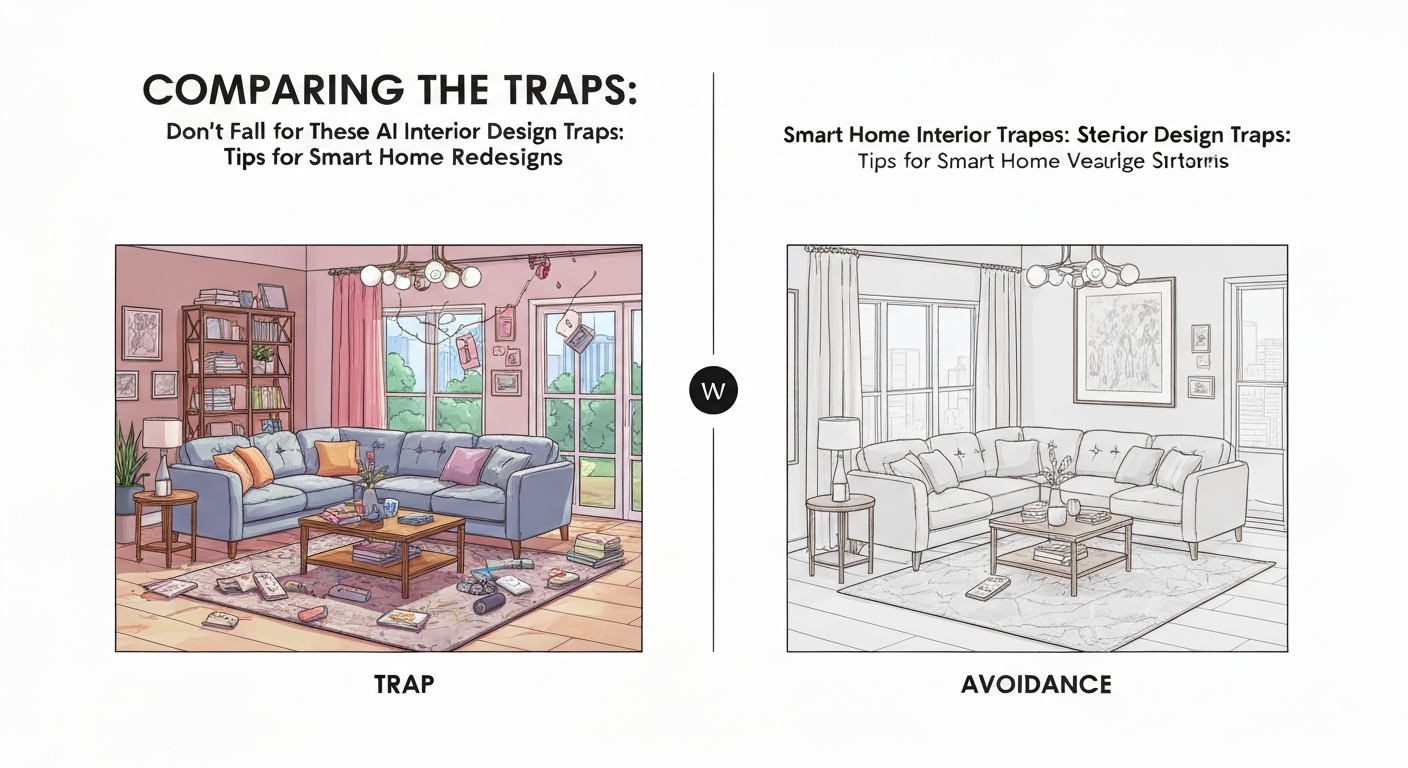
Trap
Core Challenge
Avoidance Strategy
Potential Impact (if not avoided)
Generic Look Syndrome
AI designs lack personal style, appearing uninspired. Over 40% of users report initial AI designs feel generic.
Use detailed "prompt engineering" with personal preferences, memories, and specific textures. For example, "a cozy reading nook inspired by a B.C. cabin, with a deep green velvet armchair."
A home that feels impersonal and lacks warmth, requiring costly manual revisions.
Functionality Fails
Designs don't fit real-world dimensions or practical needs (e.g., a sofa too large for a Toronto condo living room).
Input precise room measurements and existing furniture dimensions. Validate AI suggestions against physical tape measures and accessibility needs.
Purchasing ill-fitting furniture or creating layouts that obstruct movement, leading to returns and frustration.
Budget Blowouts
AI suggests expensive materials or custom pieces without cost awareness.
Specify budget ranges and preferred material types (e.g., "affordable laminate flooring," "mid-range Canadian-made sofa") in your prompts.
Exceeding renovation budgets by thousands, causing project delays or compromises on quality elsewhere.
Over-Reliance
Blindly accepting AI suggestions without critical human review. Studies show human oversight improves satisfaction by up to 60%.
Iteratively refine designs, asking "why" for each suggestion. Compare AI output with inspiration photos and practical considerations for your specific home in, say, suburban Ottawa
Smart Strategies for a Successful AI-Powered Home Redesign
Define Your Vision First
Master Prompt Engineering
Iterate and Refine Collaboratively
When to Seek Human Expertise: The Power of Collaboration
When to Seek Human Expertise: The Power of Collaboration
AI excels at generating visual concepts, but a truly successful redesign often hinges on human insight. For instance, if your vision involves opening up a main living area in a 1950s semi-detached home in Vancouver, an AI tool can suggest layouts, but it can't tell you if that wall is load-bearing. Only a human architect or structural engineer can assess the integrity of your home's structure and ensure safety, preventing a costly and dangerous mistake. Similarly, complex plumbing reroutes for a new kitchen island in a Toronto condo require the expertise of a licensed plumber, not just an AI rendering.
Beyond structural concerns, the deeply personal nature of a home benefits from a human touch. While AI can create a beautiful Scandinavian-inspired living room, a human interior designer in Halifax can interpret your subtle cues about "cozy but minimalist" or "bright but not stark," translating vague feelings into specific paint colours, textures, and furniture pieces that truly resonate with your family's lifestyle. Industry data shows that human oversight and iterative refinement can improve client satisfaction rates by up to 60% in AI-assisted creative projects, underscoring the value of this collaboration.
Finally, managing the practicalities of a renovation, from sourcing unique Canadian-made furniture to navigating unexpected delays, often requires human experience. A designer in Calgary might have established relationships with local artisans or suppliers, securing better pricing or ensuring material availability that an AI program wouldn't know. When a shipment of flooring is delayed or a custom cabinet doesn't fit perfectly, human ingenuity and problem-solving skills become indispensable to keep the project on track and within budget.
The Human-Led Future of AI Interior Design: Your Personalized Home Awaits
The Human-Led Future of AI Interior Design: Your Personalized Home Awaits
AI is often presented as a magic bullet for design, yet its true power emerges when homeowners remain firmly in the driver's seat. While tools like iDecorAI can render stunning visuals in seconds, a significant percentage of users—around 40-50% according to industry reports—find initial AI-generated designs lack a unique personal touch. The real artistry comes from using AI as a sophisticated assistant, guiding its output with your creative vision and critical oversight to avoid generic results.
Imagine a homeowner in Calgary using AI to reimagine their split-level living room. Without human input, the AI might suggest a minimalist, urban loft style that clashes with their family's love for cozy, rustic elements. By understanding and actively avoiding common AI interior design traps, you transform these potential frustrations into opportunities for innovation. The goal isn't just an AI-generated rendering, but a home that truly feels like *yours*, enhanced by technology and perfectly suited for Canadian winters.
Armed with these tips for smart home redesigns, you're ready to confidently embark on your next project. Don't fall for these AI interior design traps: tips for smart home redesigns ensure you create spaces that are both beautiful and perfectly functional, reflecting your individual style rather than a machine's default. The next step is understanding specific pitfalls and how to actively steer clear of them.
Frequently Asked Questions
What are the biggest pitfalls of using AI for home interior design?
How can I make my AI interior design look unique and not generic?
Why is it important to consider smart home integration in AI interior design plans?
Can AI interior design tools help me stick to my budget and material choices?
Is it possible to ensure AI-generated home designs are practical for real-life living?
Frequently Asked Questions
What are the biggest pitfalls of using AI for home interior design?
How can I make my AI interior design look unique and not generic?
Why is it important to consider smart home integration in AI interior design plans?
Can AI interior design tools help me stick to my budget and material choices?
Is it possible to ensure AI-generated home designs are practical for real-life living?
Keep reading
All articles →
Visualize Your Dream Home: Zillow AI's Reality Check & How to Master It

Real-World Test: We Tried 13 AI Interior Design Tools So You Don't Have To (Here Are Our Top 3 Picks!)
Dream Home on a Budget & Timeline: AI for Faster, Affordable Redesigns