

Smart Decorating with AI: Uncovering Traps for a Perfect Home
While AI democratizes interior design with instant tools, the real shift is in design authority. Homeowners must recognize that AI's efficiency can paradoxically lead to generic outcomes if not carefully guided.

Why AI is Revolutionizing Home Decor (And Why Caution is Key)
While AI promises to democratize interior design, offering tools like iDecorAI for instant mood boards and 3D renders, the real revolution isn't just in accessibility, but in the subtle shift of design authority. Homeowners, especially in Canada's competitive housing market where personal touches increase value, must recognize that AI's efficiency can paradoxically lead to generic outcomes if not carefully guided. Navigating Smart Decorating with AI: Uncovering the Hidden Traps and How to Avoid Them for a Perfect Home Design means treating AI as a sophisticated assistant, not an autonomous designer.
The global AI in interior design market projects a compound annual growth rate (CAGR) exceeding 25% from 2023-2030, underscoring its rapid integration into how Canadians envision their living spaces. This growth reflects a genuine desire for streamlined processes; about 60% of homeowners express interest in using AI for home design, eager to bypass the traditional complexities of professional consultations or extensive personal research. Imagine a homeowner in Vancouver's Kitsilano neighbourhood, using AI to visualize how a small condo living room could transform from cluttered to contemporary in minutes, a task that once took hours with magazines and sample swatches.
"AI tools are fantastic for brainstorming, but they can't feel the sunlight in my kitchen or understand why that vintage armchair from my grandmother means so much to me. That's where the human eye, and heart, still lead." — interior design consultant, Halifax
However, this allure of efficiency also introduces 'AI interior design common mistakes' and 'pitfalls of using AI for home decor'. An over-reliance on AI without human oversight often results in designs that feel impersonal or impractical for a specific Canadian home, whether it's a century home in Montreal or a modern build in Calgary. The key isn't to avoid AI, but to understand its capabilities and, more critically, its limitations. This balanced perspective ensures that AI serves as a powerful co-pilot, enhancing creativity and visualization, rather than dictating a generic aesthetic that fails to reflect individual style or practical needs like storage for winter gear.
Trap 1: The Generic Design Dilemma – Losing Your Personal Touch (And How to Inject Your Unique Style)
Trap 1: The Generic Design Dilemma – Losing Your Personal Touch
Many homeowners worry their living spaces will look like a showroom floor, stripped of personality. This fear is valid when using AI for interior design. AI algorithms learn from vast datasets of existing designs, making them prone to suggesting popular or "safe" aesthetics. For a living room in a semi-detached home in Edmonton, this might mean a prevalence of greys, whites, and minimalist furniture that feels stylish but utterly generic, lacking the warmth of a true home.
The core problem isn't the AI itself, but how we use it. When asked, "can AI make my home design look generic?", the answer is yes, if you don't actively infuse your personal touch. A 2023 industry report indicated that user satisfaction with AI design tools often hinges on the ability to customize and refine outputs, not just accept initial suggestions. This means using tools like iDecorAI for initial inspiration, then critically evaluating its suggestions against your personal preferences, memories, and the desired emotional connection to your space.
"AI is a fantastic visualiser, but it doesn't know the story behind your grandmother's armchair or the specific shade of blue that reminds you of a family cottage trip. That's where the human touch becomes irreplaceable." — kindergarten administrator, Toronto
To avoid a "cookie-cutter" design, focus on unique elements. Incorporate sentimental items like a hand-painted vase from a trip to Quebec City, custom art from a local artist, or curated vintage finds from a Kensington Market antique shop. These are elements AI cannot replicate or suggest organically. Proactively "train" the AI by providing highly specific prompts: "Design a cozy reading nook with a mid-century modern aesthetic, incorporating a deep forest green accent wall, a worn leather armchair, and space for my collection of vintage Canadian literature." This specificity guides its output away from blandness, ensuring your voice remains central to your Smart Decorating with AI: Uncovering the Hidden Traps and How to Avoid Them for a Perfect Home Design journey.
Trap 2: Budget Blowouts – When AI's Vision Exceeds Your Wallet (And Smart Budgeting Strategies)
Trap 2: Budget Blowouts – When AI's Vision Exceeds Your Wallet
AI design tools can be brilliant for visualizing a dream space, but they frequently suggest high-end finishes and custom furniture that ignore your actual bank account. Without careful input, an AI might render a stunning living room featuring a $12,000 Italian leather sofa and a bespoke built-in bookshelf, when your budget calls for IKEA and a DIY shelving unit. This disconnect is one of the most common pitfalls in Smart Decorating with AI: Uncovering the Hidden Traps and How to Avoid Them for a Perfect Home Design.
Homeowners in places like Vancouver or Toronto, where renovation costs are already steep, can easily find themselves with an AI design that requires double their allocated funds. Industry reports indicate that design mistakes, such as incorrect furniture scale or material choices based on unverified AI suggestions, can cost homeowners hundreds to thousands of dollars in returns or re-purchases, adding unexpected bloat to a project.
"An AI render might look amazing, but if it recommends a solid marble countertop when you've budgeted for laminate, it's not a design; it's a fantasy." — interior design consultant, Montréal
| Budget Strategy | Before AI Input | During AI Interaction | After AI Output |
|---|---|---|---|
| Set Clear Limits | Define total project budget ($5,000 for living room). | Input specific price ranges for key items (e.g., "sofa under $1,500"). | Filter AI suggestions by price; discard items exceeding budget. |
| Material Preferences | List preferred cost-effective materials (laminate, engineered wood). | Prompt for designs using "budget-friendly materials" or "IKEA alternatives." | Evaluate AI suggestions against real-world material costs and availability. |
| Cost-Effective Alternatives | Identify expensive items you want to "dupe" (e.g., designer lighting). | Ask AI for "affordable dupes for designer lamp X" or "DIY lighting ideas." | Research specific recommendations for cost and DIY feasibility. |
| Verification | Understand average costs for similar projects in your area (e.g., Calgary). | Use AI as a starting point for ideas, not a shopping list. | Cross-reference all AI furniture/decor suggestions with multiple Canadian retailers (e.g., Structube, Leon's, Wayfair.ca) for actual prices and shipping. |
By actively guiding the AI with financial constraints and verifying its suggestions against real-world
AI excels at generating visually stunning rooms, but it often misses the mark on how real Canadians live in their homes. This is a crucial trap when exploring Smart Decorating with AI: Uncovering the Hidden Traps and How to Avoid Them for a Perfect Home Design. An AI might suggest a sleek, minimalist living room that looks fantastic in a render, yet completely overlooks the need for toy storage in a family with young children, or a dedicated spot for muddy boots near the front door in a Vancouver townhouse. The core issue is that AI lacks an understanding of emotional significance and daily routines. It doesn't know you need a cozy reading nook by the window in your Montreal condo, or that your senior dog needs clear pathways. These tools can't account for the specific demands of a home office for a remote worker in Calgary, or a bustling kitchen in a multi-generational household in Brampton. They prioritize aesthetics over the complex ballet of daily life. To avoid this, critically evaluate AI layouts with your lifestyle in mind. Ask yourself: Is there enough accessible storage for your family's gear? Are electrical outlets conveniently placed for lamps and devices? Does the proposed furniture arrangement allow for easy movement, especially if you have pets or use mobility aids? Industry reports indicate that poor furniture placement is a common design mistake, often costing homeowners hundreds in returns or re-purchases. Instead of accepting AI's first aesthetic suggestion, use it as a starting point. Prompt tools like iDecorAI with specific functional needs: "Show me a living room layout that maximizes seating for six and includes a discreet children's play area." Then, adjust the visual output to fit your real-world requirements. Prioritize how you use the space, not just how it looks in a picture. This human-AI collaboration ensures your home is beautiful and truly livable. AI-generated images often present an idealized vision of your living room or kitchen, creating an expectation that rarely matches the tactile reality of materials, the play of natural light, or the quirks of a 1950s semi-detached home in Montreal. Homeowners frequently fear making expensive mistakes—like buying a sofa that looks great in a render but feels wrong in their space, or painting a colour that shifts dramatically from screen to wall in a north-facing condo. This is a crucial trap in Smart Decorating with AI: Uncovering the Hidden Traps and How to Avoid Them for a Perfect Home Design. Before committing to paint, fabric, or flooring, always order or pick up physical samples. Hold a paint swatch from Benjamin Moore or Sherwin-Williams against your wall at different times of day. See how a fabric sample for new drapes reacts to the morning sun versus evening lamplight in your Vancouver townhouse. Screens cannot accurately convey texture or true colour under varying light conditions. Use AI for initial conceptualization, but then translate those ideas into a precise, real-world plan. Measure everything: walls, doorways, windows, and existing furniture. Use painter's tape to map out furniture placement on the floor. This helps visualize scale and flow, preventing costly returns; industry data indicates incorrect furniture scale is a common mistake, costing homeowners hundreds in re-purchases. Consider a brief consultation with a local interior designer. They can review your AI-generated concepts and offer expert advice on feasibility, material selection, and local suppliers. A designer might point out that the polished concrete floor from your AI render would be too cold for a Canadian winter, or suggest a more durable fabric for a family with pets. Break your design project into smaller, manageable phases. Start with one room or a key element, like new paint or a rug. This allows you to test out materials and colours in a real-world setting before investing in the entire vision. It's easier to adjust a paint choice in a small bathroom than to repaint an entire open-concept main floor. While AI offers exciting possibilities for home design, simply asking a tool to "decorate my living room" often leads to generic results. The real power of Smart Decorating with AI: Uncovering the Hidden Traps and How to Avoid Them for a Perfect Home Design lies in a structured, human-led approach. Think of AI as your expert assistant, not the lead designer. This framework ensures your unique style, budget, and practical needs remain at the forefront, turning AI into a precise tool rather than a source of impersonal suggestions. The process begins with you defining your vision: pinpoint your aesthetic, functional requirements for a busy family, and a realistic budget for a semi-detached home in Calgary. Only then do you bring in AI tools like iDecorAI or RoomGPT to brainstorm. Feed them your specific criteria to generate diverse mood boards and layout ideas, leveraging their ability to quickly process vast amounts of design data. This addresses the common user pain of spending significant hours researching ideas, as AI can generate options in minutes. Next, you become the editor, critically evaluating AI outputs, picking elements that resonate, and discarding anything that doesn't fit your budget or lifestyle, like an impractical all-white rug for a home with young children. The AI then steps in again for visualization, rendering 3D walkthroughs of your curated choices. Finally, you validate these designs in the real world, ordering fabric swatches or paint samples, and consulting with local contractors to ensure the AI's suggestions are both beautiful and buildable. This five-phase collaboration prevents common pitfalls like generic designs or budget overruns. By maintaining human control at key decision points, homeowners in places like Vancouver or Montreal can ensure their AI-assisted design truly reflects their personality and practical living requirements, rather than just an algorithm's best guess. The real power of AI in home design isn't found in fully automated solutions, but in how it amplifies human creativity. Many homeowners initially treat AI as a magic wand, expecting perfect, ready-to-implement designs, when its true strength lies in its speed for generating ideas, exploring diverse styles, and visualizing complex spatial arrangements. For example, rather than asking for "a living room design," a homeowner in a Vancouver condo might prompt for "mid-century modern living room layouts for a 400 sq ft open-concept space, incorporating a designated reading nook and maximizing natural light from west-facing windows." To move beyond generic outputs, continuously learn and experiment with different AI tools like iDecorAI or RoomGPT. Each platform has unique strengths and 'AI interior design limitations and solutions'. Some excel at photorealistic renders, while others are better for floor plan generation or material suggestions. A study by the National Association of Home Builders indicated that design mistakes, such as incorrect furniture scale, can cost homeowners hundreds, if not thousands, in returns and exchanges. AI can help mitigate this by allowing rapid iteration before purchase. Use AI to explore sustainable and eco-friendly design options. Prompt it for materials and furniture with a low environmental impact, such as bamboo flooring or recycled glass countertops suitable for a kitchen renovation in an older Toronto semi-detached. Also, consider AI for smart home integration ideas, visualizing how technology—like smart lighting or automated blinds—can seamlessly blend with your decor for enhanced living, rather than feeling like an afterthought. The goal of Smart Decorating with AI: Uncovering the Hidden Traps and How to Avoid Them for a Perfect Home Design is to use AI as a sophisticated brush in your hands, not to let it be the artist itself, ensuring the perfect home design remains subjective and deeply personal. Homeowners often have practical questions about integrating AI into their decorating process, especially when navigating the potential pitfalls. Understanding how to interact with these tools ensures that Smart Decorating with AI: Uncovering the Hidden Traps and How to Avoid Them for a Perfect Home Design becomes a reality, not a source of frustration. AI's main traps include generic designs, budget overruns, impractical room layouts for daily living, and a frequent gap between the AI's perfect render and the real-world execution. For example, a sleek AI kitchen might lack enough counter space for a busy Toronto family. Actively inject your personal style. Use specific prompts like "a living room with a mid-century modern feel, but incorporating my grandmother's antique armchair." Integrate sentimental items early in your prompts, using AI for inspiration rather than direct replication. Yes, but with vigilance. Input your budget limits directly (e.g., "design a bedroom under $5,000"). Ask for cost-effective alternatives (e.g., "suggest Canadian-made sofa options under $1,200"). Always verify prices with real retailers like Structube or EQ3, as AI can sometimes suggest items outside your range. AI struggles with complex functional needs. Prioritize your lifestyle first. Critically review AI layouts for practicality—will that dining table fit eight comfortably in your Vancouver condo? Provide specific functional prompts: "a home office for two, with ample natural light for video calls." Use AI for visualization, then validate. Get physical paint swatches from brands like Benjamin Moore or Sherwin-Williams. Measure furniture against your actual space (e.g., a 90-inch sofa in a 10x12 foot living room) before purchasing. AI can show scale, but your tape measure confirms it. Look for tools that allow extensive customization and detailed prompts, and provide realistic renders. User satisfaction often hinges on a tool's ability to refine outputs, not just initial suggestions. Read reviews focusing on how users could tweak designs to fit their specific needs, rather than just the initial wow factor. By approaching AI with these considerations, homeowners in Canada can effectively use tools like iDecorAI as a powerful assistant. It helps generate
The biggest challenges include AI's difficulty in truly understanding personal taste beyond keywords, often leading to generic or impractical suggestions. It might recommend a velvet sofa for a family with young children, or oversized furniture for a compact Toronto condo. AI also struggles with real-world constraints like existing plumbing or awkward room layouts, requiring significant human oversight to adapt designs for actual living spaces. To retain your personal style, provide AI tools with specific examples: photos of rooms you love, existing furniture you want to keep, and clear descriptions of your lifestyle. Don't just accept the first AI output. Refine prompts, specify colours like "muted sage green" instead of "green," and mention items like "my grandmother's antique armoire." Treat AI as a brainstorming partner, not the sole designer, ensuring your unique touch shines through. Setting a budget is essential because AI tools don't inherently consider real-world costs. An AI might suggest high-end marble countertops or custom millwork that far exceed your financial comfort for a Calgary bungalow. Without a budget, you risk falling for beautiful but unaffordable designs. Clearly define your spending limits for furniture, materials, and labour upfront, then use AI to explore options within those parameters, preventing costly disappointments. Not always. AI often prioritizes visual appeal, sometimes overlooking practicalities for a busy family or a pet-friendly home. It might suggest a white shag rug for a mudroom in a snowy Montreal winter, or delicate fabrics for a playroom. Always review AI designs through a practical lens: consider durability, maintenance, and how the space will function daily. Adjust for real-life needs, like storage for hockey gear or easy-to-clean surfaces. Yes, but with careful execution. AI-generated designs often look stunning on screen due to perfect lighting and rendering. In real life, factors like natural light, actual material textures, and room dimensions can alter the perception. A vibrant blue wall might appear duller in a north-facing bedroom in Edmonton. Always consider samples of paint and fabric, and visualize how the design translates to your specific space, ensuring the final result matches the digital vision.Trap 3: Functionality Failures – Designing for Looks, Not Living (And Prioritizing Practicality)

Functionality Failures: Designing for Looks, Not Living
"We saw a beautiful AI-generated kitchen, but it put the dishwasher right across from the fridge. In real life, that would be a constant traffic jam." — home renovator, Halifax
Trap 4: The 'Perfect' Image vs. Real-World Reality – Bridging the Execution Gap (And From AI Render to Tangible Transformation)
Request Physical Samples
Measure and Map Your Space
Consult a Human Expert
Phased Execution Strategy
Trap 5: Over-Reliance and Decision Fatigue – When AI Becomes Overwhelming (And Mastering AI as a Co-Pilot)

Trap 5: Over-Reliance and Decision Fatigue – When AI Becomes Overwhelming
The irony of AI in home design is that while it promises efficiency, an overabundance of options can actually paralyze homeowners. Instead of simplifying choices, tools like iDecorAI or other design platforms can generate hundreds of variations for a single room, making it harder to commit. For example, a homeowner in Calgary trying to pick a living room paint colour might receive 50 distinct shades of grey and beige, each paired with different furniture styles. This sheer volume often leads to decision fatigue, where the user feels overwhelmed rather than empowered.
Research shows user satisfaction with AI tools often hinges on their ability to customize and refine outputs, not just accept initial suggestions. This means the default "perfect room" AI generates might be beautiful, but if it doesn't align with your specific taste or budget, you're back to square one. A senior kindergarten administrator in Toronto, for instance, might use AI to visualize a new staff lounge but find the AI's "modern chic" suggestions too sterile for a space meant for relaxation and collaboration.
"I wanted inspiration, not an instruction manual. When the AI showed me 30 versions of a minimalist kitchen, I just shut it down. I needed a co-pilot, not a dictator." — home renovator, Vancouver Island
To avoid this trap in Smart Decorating with AI: Uncovering the Hidden Traps and How to Avoid Them for a Perfect Home Design, approach AI as a focused assistant. Define clear objectives for each interaction, tackling one design element at a time to prevent information overload. This selective engagement ensures AI remains a valuable co-pilot, guiding your vision without overwhelming your decision-making process, which is critical for creating a truly perfect home.
Your Smart Decorating Playbook: A Human-AI Collaboration Framework for Success
Your Smart Decorating Playbook: A Human-AI Collaboration Framework for Success

Beyond the Traps: Maximizing AI's Potential for a Truly Perfect Home
"AI isn't here to replace the designer's eye, but to give homeowners a clearer, faster way to articulate what they truly want. It's like having a hundred mood boards created in minutes, not weeks." — Interior Design Consultant, Montreal
FAQs: Smart Decorating with AI
Quick Answers for AI Decorating
Frequently Asked Questions
What are the biggest challenges of using AI for home decorating?
How can I ensure my personal style isn't lost with AI interior design?
Why is it important to set a budget when using AI for home design?
Is AI home design always practical for everyday living?
Can AI-generated designs look good in real life, not just on screen?
Frequently Asked Questions
What are the biggest challenges of using AI for home decorating?
How can I ensure my personal style isn't lost with AI interior design?
Why is it important to set a budget when using AI for home design?
Is AI home design always practical for everyday living?
Can AI-generated designs look good in real life, not just on screen?
Keep reading
All articles →
Visualize Your Dream Home: Zillow AI's Reality Check & How to Master It
Zillow's new AI tool goes beyond staging, democratizing the 'designer's eye' for house hunters. It allows you to test personal style against a property's bones, fundamentally shifting how you visualize your dream home.

Real-World Test: We Tried 13 AI Interior Design Tools So You Don't Have To (Here Are Our Top 3 Picks!)
The sheer volume of new AI interior design tools often complicates the design process for homeowners. Our Real-World Test of 13 platforms reveals which truly deliver actionable, budget-friendly plans.
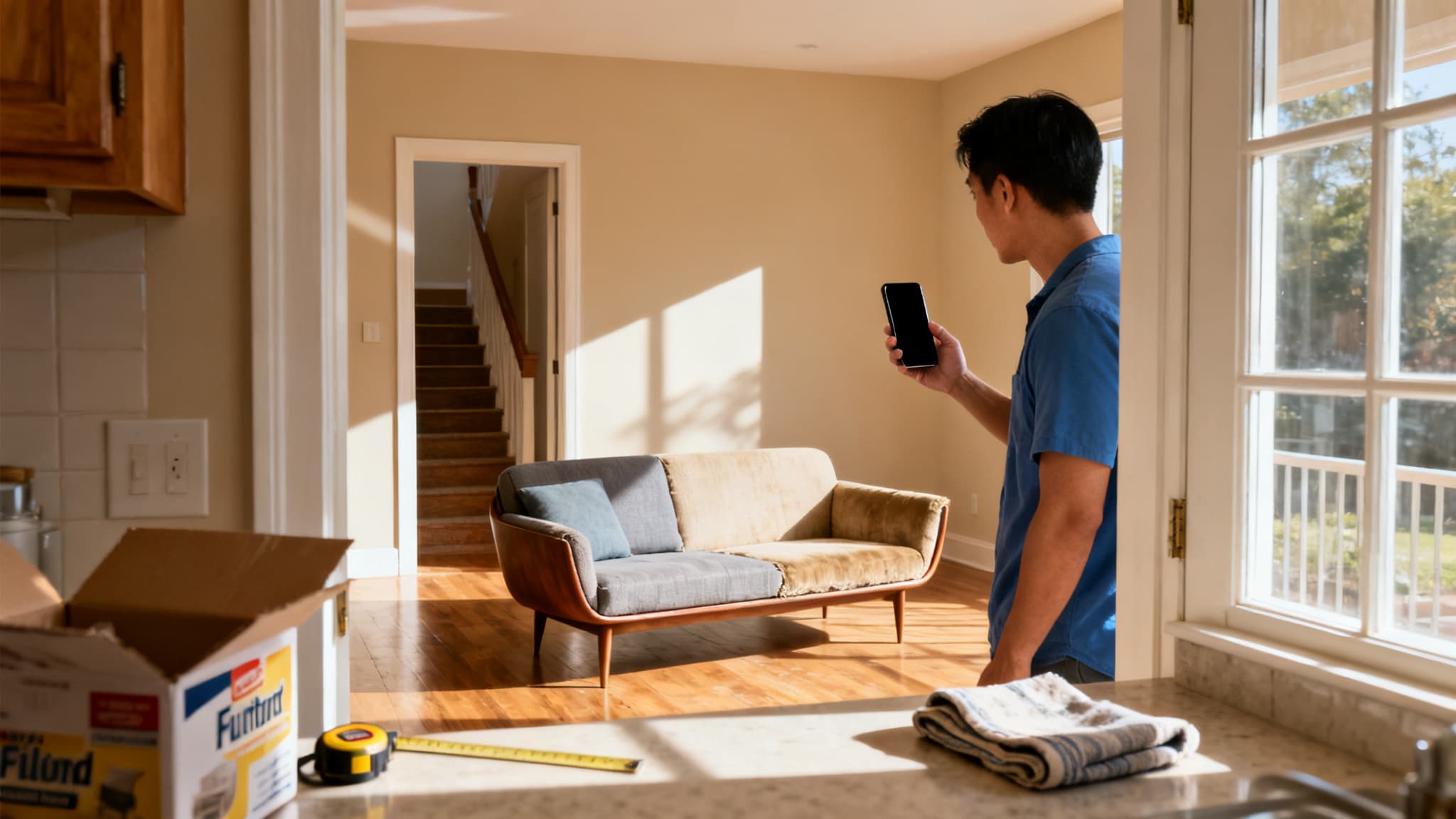
Dream Home on a Budget & Timeline: AI for Faster, Affordable Redesigns
While many assume a personalized dream home requires a hefty budget, AI tools are fundamentally shifting this reality, acting as a personal project manager for your entire redesign. They provide a step-by-step blueprint that optimizes every phase, making your dream home a tangible goal.